
Haunted House: The Complete Guide to Halloween Attractions
Learn what a haunted house is, how they work, how scary they are, and how to find one near you.
Every Halloween season, haunted houses attract millions of visitors looking for thrills, suspense, and unforgettable scares. From neighborhood yard haunts to massive professional attractions, haunted houses have become one of the most popular Halloween traditions in the United States.
These immersive attractions combine theatrical set design, live actors, lighting effects, sound design, and storytelling to create environments that feel like stepping inside a horror movie.
Whether you’re planning your first haunted house visit or exploring how these attractions work behind the scenes, this guide explains what haunted houses are, how they operate, what to expect inside, and how to choose the right experience for you.
What Is a Haunted House?
A haunted house is a Halloween attraction designed to scare and entertain visitors through themed environments, special effects, and live performers. Guests typically walk through a series of rooms or corridors filled with eerie scenes, scare actors, and surprise moments designed to create suspense and excitement.
Most haunted houses operate as walkthrough attractions, where visitors follow a guided path through the experience. Along the way, guests encounter dark hallways, hidden characters, sound effects, and carefully timed jump scares.
While haunted houses are designed to feel unpredictable and intense, they are carefully planned and controlled environments that prioritize visitor safety.
What Happens Inside a Haunted House?
Inside a haunted house attraction, visitors move through a series of themed environments designed to create suspense and surprise. Each room or corridor introduces new characters, settings, and scares.
Guests typically encounter:
• Dark hallways and maze-like pathways
• Actors hiding within scenes ready to deliver jump scares
• Fog effects and dramatic lighting
• Sound effects and music designed to build tension
• Detailed sets such as haunted mansions, graveyards, or abandoned laboratories
The goal is to create a story-driven experience that gradually builds tension while delivering memorable scare moments.
Learn more in our detailed guide: What Happens in a haunted house
Types of Haunted Houses
Not all haunted houses are the same. Attractions vary widely in theme, scale, and intensity.
Understanding the different types of haunted houses can help visitors choose the experience that fits their comfort level.
Professional Haunted Attractions
Professional haunted attractions are large-scale productions that operate during the Halloween season. These attractions often feature elaborate sets, professional actors, animatronics, and cinematic lighting effects.
Many professional haunts operate for several weeks each fall and attract thousands of visitors.
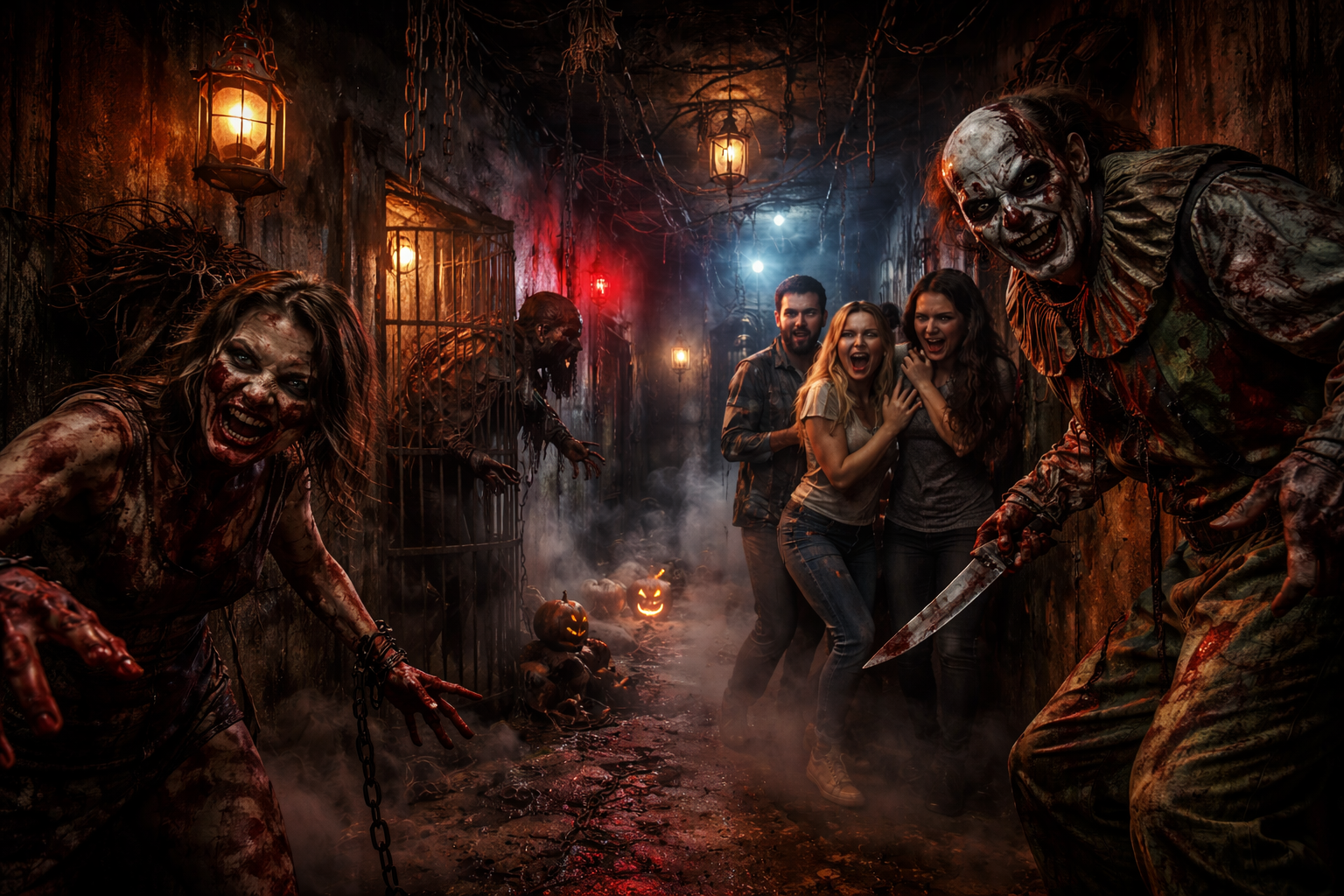
Common features include:
• Large walkthrough mazes
• Highly detailed themed environments
• Dozens of live scare actors
• Advanced lighting and sound effects
• Animatronics and moving props
These attractions are typically the most intense and immersive haunted house experiences.
Home Yard Haunts
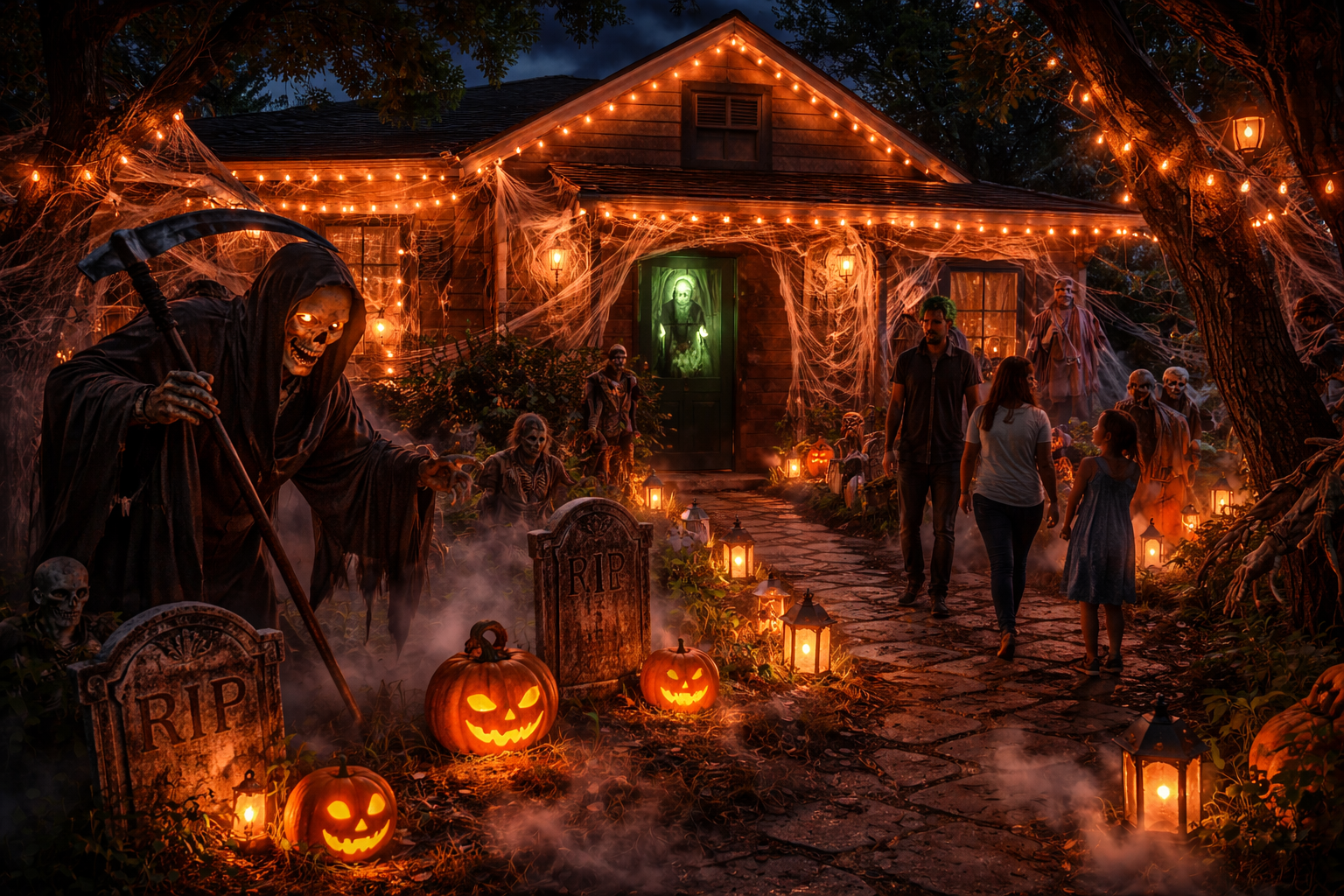
Home haunts are Halloween displays created by enthusiasts in their own yards or garages. Some home haunts are simple decorations, while others become elaborate walkthrough experiences built by dedicated hobbyists.
These attractions often feature:
• Handmade props and decorations
• Creative themed environments
• Community-driven experiences
• Smaller walkthrough setups
Home haunts are an important part of Halloween culture and often inspire future professional haunt designers.
Theme Park Haunted Houses
Major theme parks often create temporary haunted attractions during Halloween events. These haunts are typically part of larger seasonal celebrations featuring multiple haunted houses and scare zones.
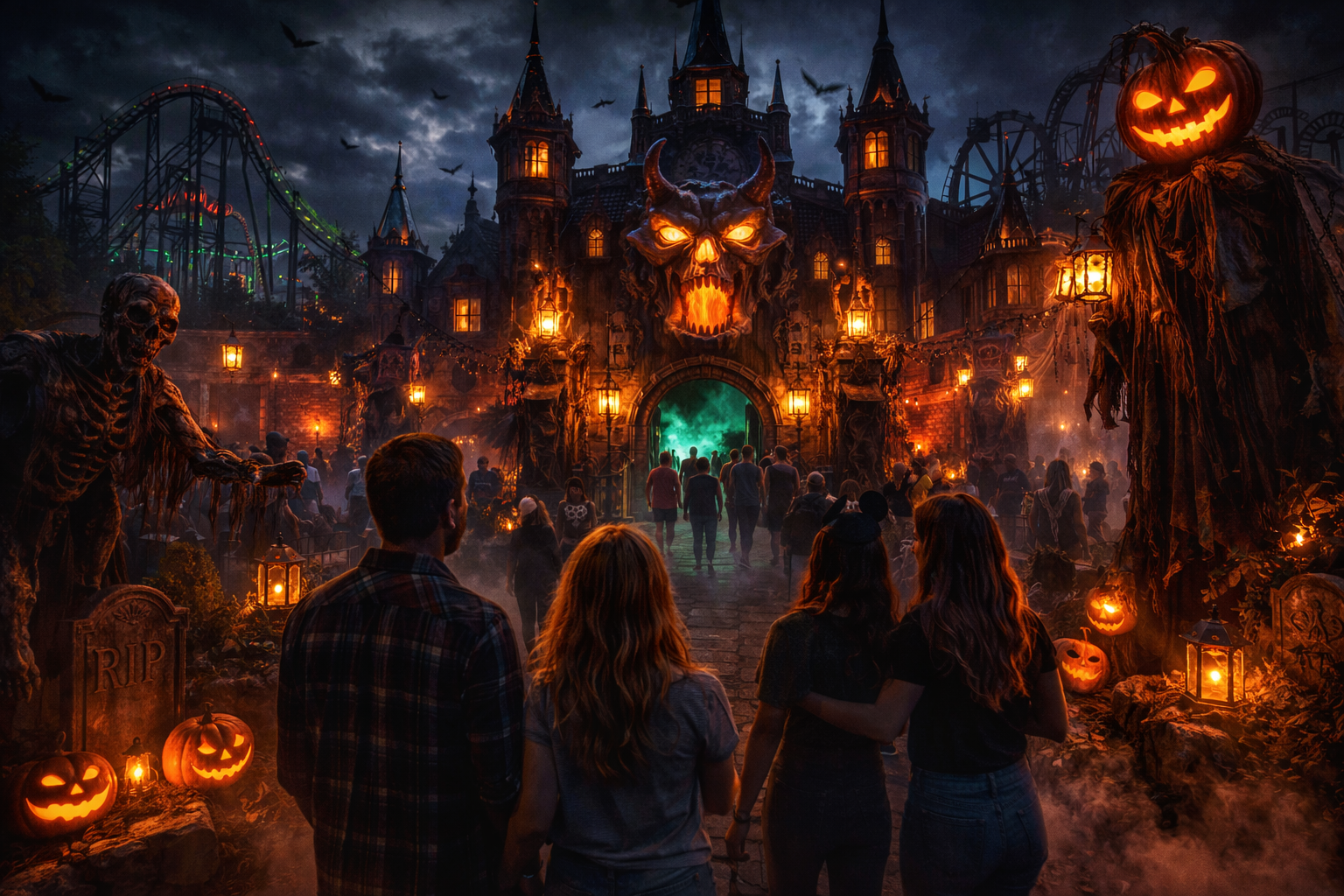
Theme park haunts tend to focus heavily on storytelling, cinematic sets, and crowd flow management.
Visitors often experience:
• Multiple themed haunted houses
• Outdoor scare zones
• Halloween-themed shows and entertainment
• Food, merchandise, and festival environments
Classic Dark Ride Haunted Houses
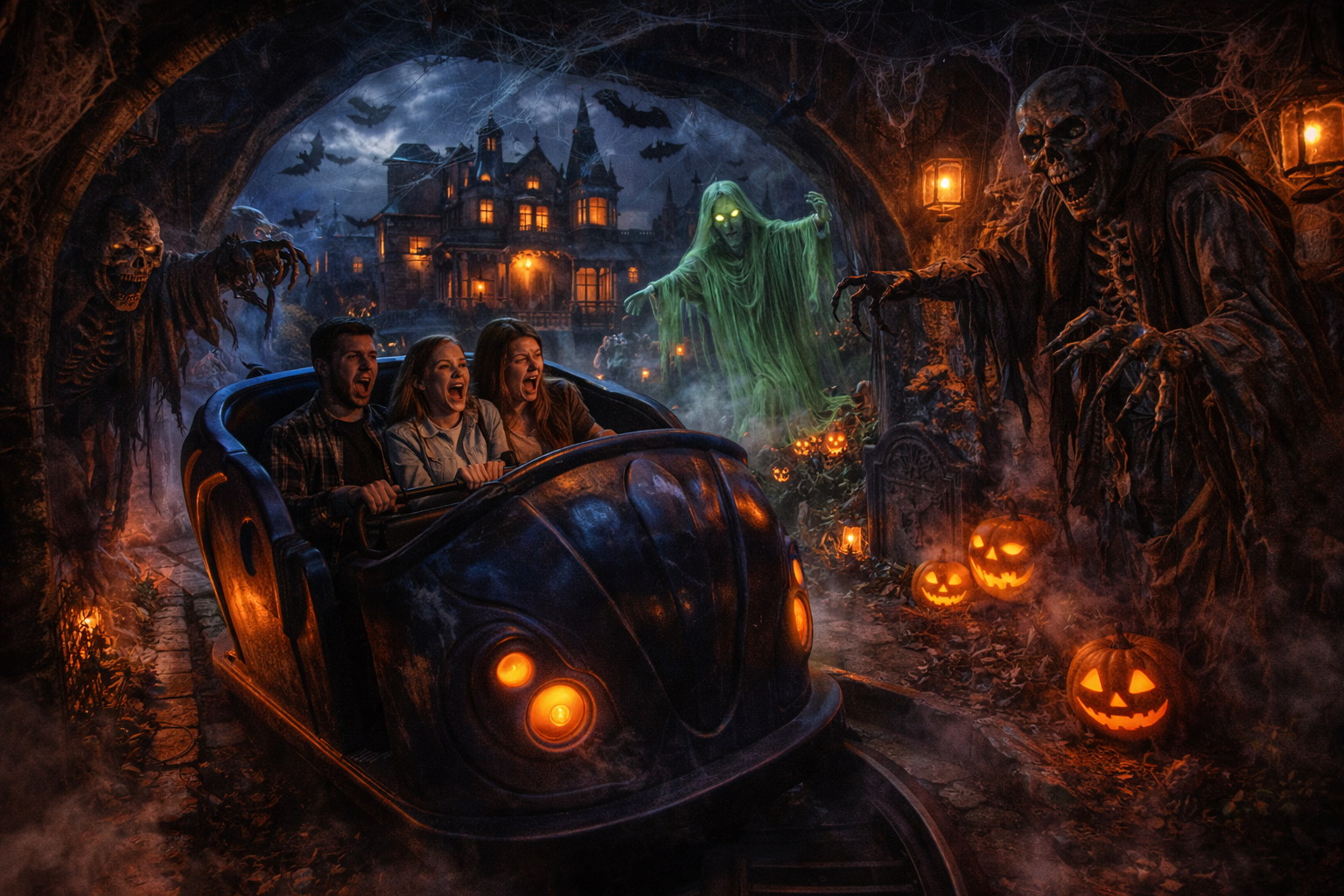
Some haunted house experiences take place as ride-through attractions, where guests sit in vehicles that move through scenes instead of walking. The haunted house concept traces back to early amusement park “ghost train” rides. Guests traveled in carts through spooky scenes filled with animatronic figures and lighting effects.
These early attractions helped shape the modern haunted house format we know today.
The experience typically includes:
• Ride vehicles moving through scenes
• Animatronic characters
• Special lighting and sound effects
• Story-driven environments
How Haunted Houses Work
Behind the scenes, haunted houses operate as carefully coordinated theatrical productions.
Actors are trained to:
- Deliver well-timed startle moments
- Adapt to guest reactions
- Reset quickly between groups
- Maintain character immersion
Timing is critical. A well-executed scare relies on anticipation and surprise.
Modern haunted houses often use:
- Motion-triggered animatronics
- Pneumatic pop-up props
- Fog machines
- Air cannons
- Strobe lighting
- Directional sound
These effects increase unpredictability and amplify the experience.
Low lighting increases tension by limiting visibility. Sound effects guide pacing and heighten emotional responses.
Haunted houses commonly use:
- Ambient soundtracks
- Sudden audio spikes
- Blacklight effects
- Hidden LED lighting
The environment does much of the psychological work.
Professional haunted houses manage:
- Timed entry groups
- Throughput control
- Fire code compliance
- Clearly marked emergency exits
- On-site staff monitoring
While the experience may feel chaotic, operations behind the scenes are highly structured.
If you’ve never visited one before, learn what happens in a haunted house step-by-step.
What to Expect at a Haunted House
Since haunted houses often feature dark pathways, tight spaces, and uneven surfaces, dressing comfortably ensures you can focus on the scares—not your shoes. Here are some of the top questions we’ve gathered to help you know what to expect.
Haunted houses are designed to create suspense, surprise, and adrenaline. However, the intensity of the experience can vary widely depending on the attraction.
Some haunted houses focus on eerie atmosphere and storytelling, while others rely on sudden scares, loud sound effects, and intense imagery to startle visitors.
Many professional attractions even publish a scare level rating so guests can choose the type of experience that fits their comfort level.
Signs a Haunted House May Be More Intense
If you’re unsure how scary a haunted house might be, look for clues such as:
• Age recommendations listed by the attraction
• “Family-friendly” or “lights-on” experiences
• Daytime events designed for younger visitors
• Guest reviews describing the scare level
Remember, haunted attractions are designed to be thrilling, but there is usually an option for nearly every comfort level.
Even though haunted houses are meant to feel chaotic and frightening, professional attractions operate under strict safety guidelines designed to protect visitors.
Behind the scenes, haunted attractions carefully manage crowd flow, emergency exits, and staff training to ensure the experience remains controlled.
Common Haunted House Safety Measures
Most professional haunted attractions include:
• Clearly marked emergency exits throughout the maze
• Fire safety inspections and safety-approved materials
• Staff positioned inside the attraction to monitor guests
• Rules preventing physical contact between actors and visitors
Guests are also expected to follow simple guidelines such as staying on the designated path and avoiding contact with props or performers.
Ticket prices for haunted houses can vary depending on the size and popularity of the attraction.
Smaller local haunts may offer inexpensive admission, while large professional attractions with elaborate sets and actors typically charge higher ticket prices.
Typical Haunted House Ticket Prices
Most haunted attractions fall within these ranges:
• General admission: $15 – $40
• VIP or fast-pass tickets: $40 – $80
• Multi-attraction events: $50 – $100+
VIP tickets are common at busy attractions because they allow guests to skip long lines during peak Halloween nights.
The length of a haunted house experience depends on the size of the attraction and the number of themed scenes inside.
Most haunted houses are designed as walkthrough experiences where visitors move through a controlled path of rooms and corridors.
Average Haunted House Duration
Visitors can usually expect:
• 10–20 minutes for a standard haunted attraction
• 20–30 minutes for larger professional haunts
• 30+ minutes for multi-maze or theme park attractions
Keep in mind that wait times can sometimes be longer than the walkthrough itself, especially during peak October weekends.
Because haunted houses often include dark hallways, uneven flooring, and tight spaces, wearing comfortable clothing can make the experience much easier.
Visitors should focus on clothing that allows them to move easily and navigate dim environments.
Recommended Haunted House Clothing
For the best experience, wear:
• Comfortable closed-toe shoes
• Weather-appropriate layers for outdoor attractions
• Clothing that allows easy movement
Avoid wearing high heels, long costumes, or restrictive outfits that could make walking through the attraction more difficult.
The Haunted House Industry
Haunted houses are more than backyard decorations or pop-up scare events — they are a major part of the Halloween season across the United States.
Every fall, thousands of haunted attractions open their doors, transforming warehouses, farms, theme parks, and outdoor spaces into immersive worlds filled with suspense, storytelling, and carefully timed scares. For many communities, attending a haunted house has become an annual tradition.
While each haunted house is unique, most share common characteristics:
- Seasonal operation (primarily September through early November)
- Live actors and immersive environments
- Multiple themed rooms or scenes
- Carefully managed guest flow
- Safety protocols and trained staff
What Makes Modern Haunted Houses Different?
Today’s haunted houses are far more advanced than the simple “ghost rides” of the past.
Many attractions now feature:
- Large-scale animatronics
- Cinematic-quality set design
- Advanced lighting and sound systems
- Fog, scent, and environmental effects
- Story-driven walkthrough experiences
Instead of just jumping out to scare you, many haunted houses now build suspense scene by scene, creating a fully immersive experience from the moment you enter the queue to the final exit.
What to Expect from the Experience
For first-time visitors, it helps to understand how haunted houses typically operate.
Most experiences:
- Last between 15 and 45 minutes
- Move guests through in small groups
- Increase intensity gradually
- Rely on surprise and anticipation
Because most haunted houses operate for a limited number of nights each year, October weekends are usually the busiest. Buying tickets in advance is strongly recommended during peak season.
Here’s a general snapshot:
| Category | Typical Range |
|---|---|
| Ticket Price | $15-$40 |
| Season Length | 20-40 Nights |
| Peak Attendance | October Weekends |
| Experience Length | 15-14 Minutes |
Find Haunted Houses Near You
Explore haunted houses by state and discover the best attractions near you.
Why Haunted Houses Continue to Grow in Popularity
Haunted houses have evolved from simple carnival ghost rides into immersive seasonal entertainment experiences enjoyed by millions each year. From small neighborhood yard haunts to large professional attractions, haunted houses continue to grow in scale, creativity, and popularity.
Haunted houses remain popular because they combine:
- A shared social experience
- Seasonal excitement
- Immersive storytelling
- A safe adrenaline rush
There’s something uniquely memorable about walking through a dark corridor with friends, laughing after a jump scare, and stepping back into the cool October air with your heart still racing.
For many people, visiting a haunted house marks the unofficial start of Halloween season.
Find a Haunted House Near You
If you’re ready to experience a haunted attraction this Halloween, the best way to get started is by exploring haunted houses near your location.
Different attractions offer different scare levels, themes, and experiences, so browsing multiple options can help you find the perfect haunt for your Halloween adventure.
Browse our directory of haunted houses near you and start planning your visit.
Haunted House Frequently Asked Questions
Visitors often have questions before attending their first haunted house. Here are answers to some of the most common questions about haunted attractions.