
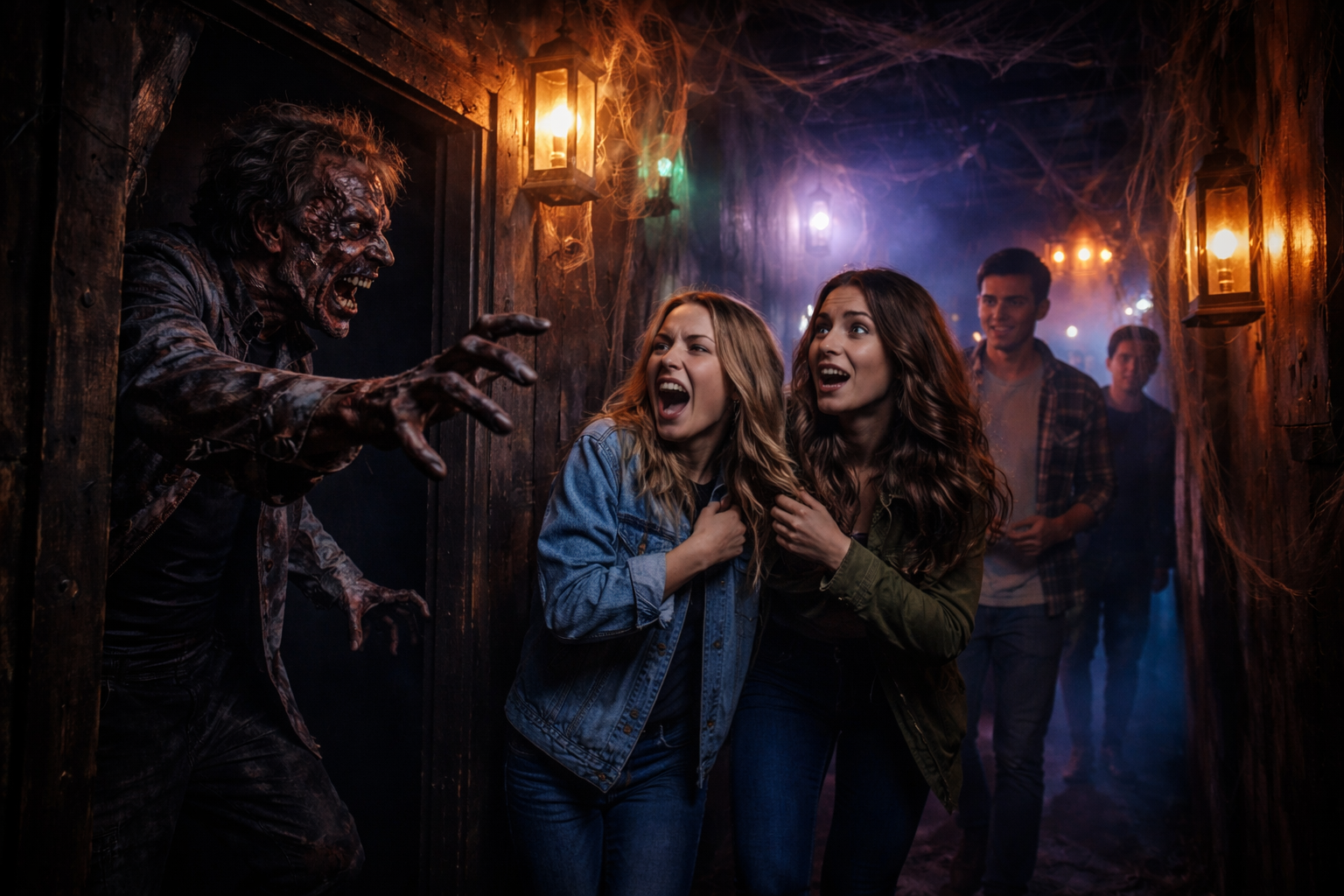
What Happens in a Haunted House?
A Visitor’s Guide to the Experience
For many first-time visitors, the biggest question before attending a haunted attraction is simple: what actually happens inside a haunted house?
Haunted houses are immersive walkthrough attractions designed to frighten and entertain guests through a combination of actors, special effects, and elaborate themed environments. Visitors typically move through a series of rooms or corridors where different scenes, characters, and scares unfold.
While every haunted attraction is unique, most follow a similar structure that builds suspense and delivers a series of scares along the way.
New to haunted attractions? Start with our complete Haunted House Guide.
Entering the Haunted Attraction
The experience usually begins before guests even enter the haunted house itself. Many attractions create an eerie atmosphere outside the building to build anticipation while visitors wait in line.
Common pre-entry elements include:
• Dark lighting and fog effects
• Themed decorations and props
• Music or creepy sound effects
• Actors roaming the queue line
• Staff explaining attraction rules and safety guidelines
These elements help set the mood and prepare visitors for the experience inside.
Walking Through a Haunted Maze
Once inside the attraction, visitors typically follow a guided path through a maze of themed rooms and hallways. The pathway is designed to control the flow of guests while allowing actors and effects to deliver carefully timed scares.
As visitors move through the attraction, they may encounter:
• Narrow hallways or winding corridors
• Doors, curtains, or hidden passageways
• Themed environments like haunted mansions, graveyards, or laboratories
• Sudden lighting changes or sound effects
The goal of these environments is to create a sense of unpredictability and suspense.
Scare Actors and Live Performers
One of the most memorable parts of a haunted house is the presence of scare actors. These performers hide within scenes and jump out unexpectedly to startle visitors.
Scare actors may appear as:
• Ghosts, zombies, or monsters
• Creepy clowns or masked characters
• Haunted house residents or villains
• Creatures lurking in the dark
Actors use timing, movement, and sound to create surprise moments that make visitors jump.
Although actors may get very close to guests, most haunted houses operate under strict “no touching” policies to keep the experience safe.
Special Effects and Immersive Sets
Modern haunted attractions rely heavily on special effects and set design to create realistic environments. Professional haunts often spend months building elaborate scenes designed to immerse visitors in the story.
Common effects used inside haunted houses include:
• Fog machines and atmospheric lighting
• Strobe lights or flickering effects
• Hidden air blasts or moving props
• Animatronics that suddenly activate
• Surround sound effects and music
These effects help make each scene feel alive and unpredictable.
Jump Scares and Surprise Moments
The heart of the haunted house experience is the jump scare. These moments are carefully timed to catch visitors off guard and create bursts of adrenaline.
Jump scares often occur when:
• A hidden actor suddenly appears from the darkness
• A prop or animatronic activates unexpectedly
• Loud sound effects trigger in a quiet hallway
• A door or panel opens suddenly nearby
These moments happen quickly, creating a mix of fear and excitement that keeps visitors engaged throughout the attraction.
Moving Through Multiple Themed Scenes
Most haunted houses are divided into multiple scenes, each with its own theme and characters. This structure helps keep the experience fresh as visitors progress through the attraction.
Examples of themed scenes may include:
• Haunted graveyards filled with skeletons
• Abandoned hospitals or laboratories
• Creepy basements or haunted mansions
• Dark forests with lurking creatures
• Post-apocalyptic or zombie environments
Each scene introduces new scares and visual elements to keep visitors guessing.
How Long Haunted Houses Usually Last
The length of a haunted house experience varies depending on the size and complexity of the attraction.
Most haunted houses take:
• 10 to 20 minutes to walk through
• Larger attractions may last 30 minutes or more
Because visitors move through in small groups, the pace is usually controlled so that scares can be delivered effectively.
Even though the walkthrough itself may be short, the full experience can include waiting in line, enjoying pre-show entertainment, or exploring additional attractions on site.
Safety and Rules Inside Haunted Houses
Although haunted houses are designed to feel chaotic and frightening, they operate under controlled safety guidelines.
Visitors are typically expected to follow simple rules such as:
• Do not touch actors or props
• Do not run through the attraction
• Stay on the designated path
• Follow instructions from staff members
These rules help ensure the experience remains safe for both guests and performers.
Why Haunted Houses Are So Popular
Haunted houses have become one of the most popular Halloween traditions because they combine storytelling, theater, and adrenaline.
For many visitors, the experience is thrilling because it allows them to face fear in a controlled environment. The sudden scares trigger adrenaline, which can make the experience exciting and memorable.
For friends and families, haunted houses also create shared moments of surprise, laughter, and excitement.
Learn More Before Visiting a Haunted House
If you’re planning your first haunted house visit, these guides can help you understand what to expect:
• How scary haunted houses really are
• Are haunted houses safe for visitors?
• What to wear to a haunted house
Ready to Experience One?
Browse haunted houses near you and find an attraction that matches your comfort level.
View our complete haunted house guide for more haunted house survival tips.
Latest Video

haunt your inbox
Sign up for exclusive news, spooky updates, and more.