
Are Haunted Houses Safe? Everything You Need to Know
Professional haunted attractions are designed to terrify you — and equally designed to bring you out the other side intact. The overwhelming majority of visits to professionally operated haunted houses end with guests emerging shaken, exhilarated, and already debating whether to go back. But understanding what makes a haunted house safe, and what to look for when choosing a venue, is worth knowing before you walk through that first door.
What Professional Haunted Attractions Do to Keep Guests Safe
The haunted attraction industry has matured considerably. Most reputable venues operate under local permitting requirements, fire codes, and annual inspection mandates. Many states now require specific dark ride and haunted attraction inspections — requiring sprinkler systems in enclosed spaces and clearly marked fire egress paths even when they are deliberately hidden from the guest experience.
No-Touch Policies
The industry standard at virtually every professional haunted house is a strict no-contact policy. Actors are trained to generate fear through proximity, sound, timing, and surprise — not physical contact. Accidental bumping in tight corridors happens, but deliberate touching is a policy violation at any reputable venue.
Security Monitoring
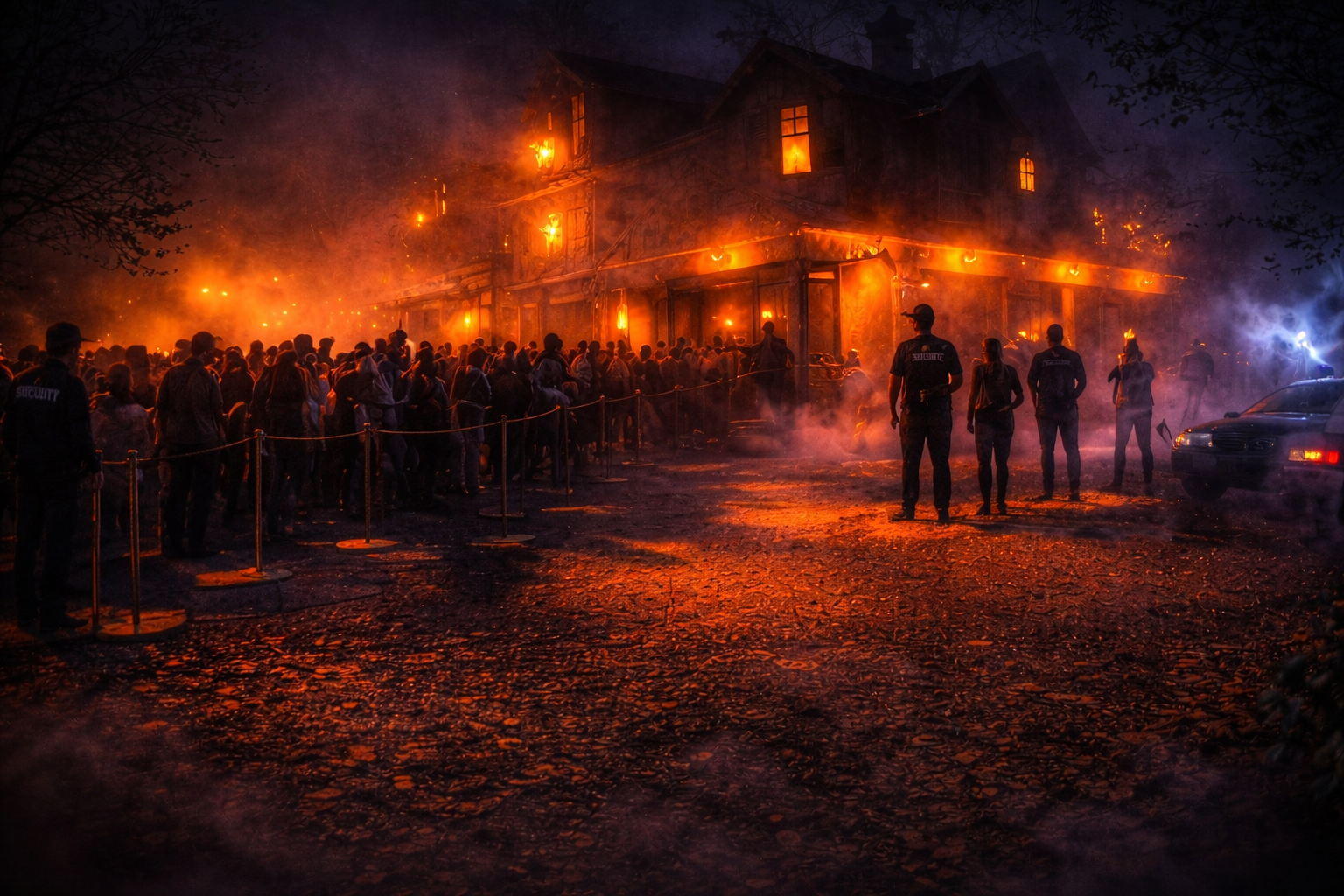
Larger professional haunts use camera systems covering queue lines and internal attraction spaces, with staff actively monitoring feeds. Most venues employ trained security personnel — particularly on high-volume nights like the last weekends of October.
Emergency Exit Protocols
A hallmark of professionally run haunts is a clearly communicated safe word or exit signal. If a guest becomes too frightened, overwhelmed, or disoriented, staff can be summoned and lights brought up to guide the guest safely out. Look for signage explaining this at the entrance, or ask staff before you enter.
The Haunted Attraction Association’s Certification Program
One of the most concrete quality signals in the industry is HAA (Haunted Attraction Association) certification. In 2026, the HAA certified top haunted attractions across the United States through a tiered program recognizing Platinum, Gold, and Silver level venues. HAA certification involves a review of safety practices, operational standards, and guest experience quality. While not every excellent haunt pursues certification, it is a meaningful indicator when evaluating an unfamiliar venue. You can search the full list at haunt.org.
Common Safety Concerns — and the Reality Behind Them
Will actors touch me?
At professionally run attractions, almost universally no. The no-contact policy is a cornerstone of the industry. Actors are trained specifically to scare without physical contact.
What if I have a medical condition?
Haunted houses generate significant adrenaline spikes. People with heart conditions, severe anxiety disorders, or who are pregnant are consistently advised not to enter. Most venues include these disclaimers on signage and their websites. Check with the venue and your physician if you have concerns.
Are haunted houses safe for kids?
Age appropriateness varies enormously. Many haunted attractions are designed for adults seeking genuine fear. Others offer family-friendly events or separate kids-specific programming. Always check the venue’s stated age recommendation — we cover this in detail in our guide to whether haunted houses are safe for kids.
What about crowd safety?
On peak nights — the final two weekends of October — popular venues manage enormous crowds. Reputable operations use timed ticketing, group spacing, and queue management. Buying tickets in advance and opting for weeknights significantly reduces density.
Red Flags to Watch For
| Red Flag | What It May Indicate |
|---|---|
| No online presence or reviews | Difficult to evaluate quality or safety record |
| No safety communication at entry | Understaffed or poorly managed operation |
| No visible security on peak nights | Crowd management may be inadequate |
| No stated age recommendations | “Open to all ages” at an extreme haunt is a warning sign |
| Dark or chaotic queue areas | Management issues often surface before you even enter |
Tips for a Safe Visit
- Check reviews before buying tickets — look specifically for mentions of safety protocols and recent visitor feedback
- Brief your group before entering — agree on what to do if someone needs to stop, and confirm everyone knows the exit signal
- Do not run inside the attraction — the most common cause of guest injuries is twisted ankles on uneven terrain in the dark
- Respect the no-touch policy — do not attempt to touch actors or disrupt the experience for other guests
- Arrive early or on a weeknight — smaller crowds mean better staff responsiveness if anyone needs assistance
Frequently Asked Questions
Are haunted houses safe for people with anxiety?
It depends on severity. Mild anxiety? Many people find controlled fear environments therapeutic. Severe anxiety disorders? Consult a professional first, and consider venues that offer family-friendly or lights-on options.
Can you get hurt at a haunted house?
Minor incidents — stumbles and startled reactions — are the most common. Serious injuries are rare at professionally run venues. Running inside attractions significantly increases risk.
What is the HAA?
The Haunted Attraction Association is the primary professional trade organization for the haunted house industry. Their certification program evaluates attractions on safety and operational standards. Learn more at haunt.org.
Are haunted houses regulated?
Yes, in most jurisdictions. Local fire codes, building permits, and in many states, specific dark ride inspection requirements apply. Regulatory rigor varies by state and municipality.
What should I do if I’m too scared inside?
Ask any staff member for assistance. Professional haunted houses have exit procedures for overwhelmed guests — typically involving lights being brought up and a staff member escorting you out safely.
Browse HAA-certified and highly rated haunted attractions by state at the Haunt Harvester directory — with fear-level ratings to help you find the right experience for your group.
Latest Video

haunt your inbox
Sign up for exclusive news, spooky updates, and more.