

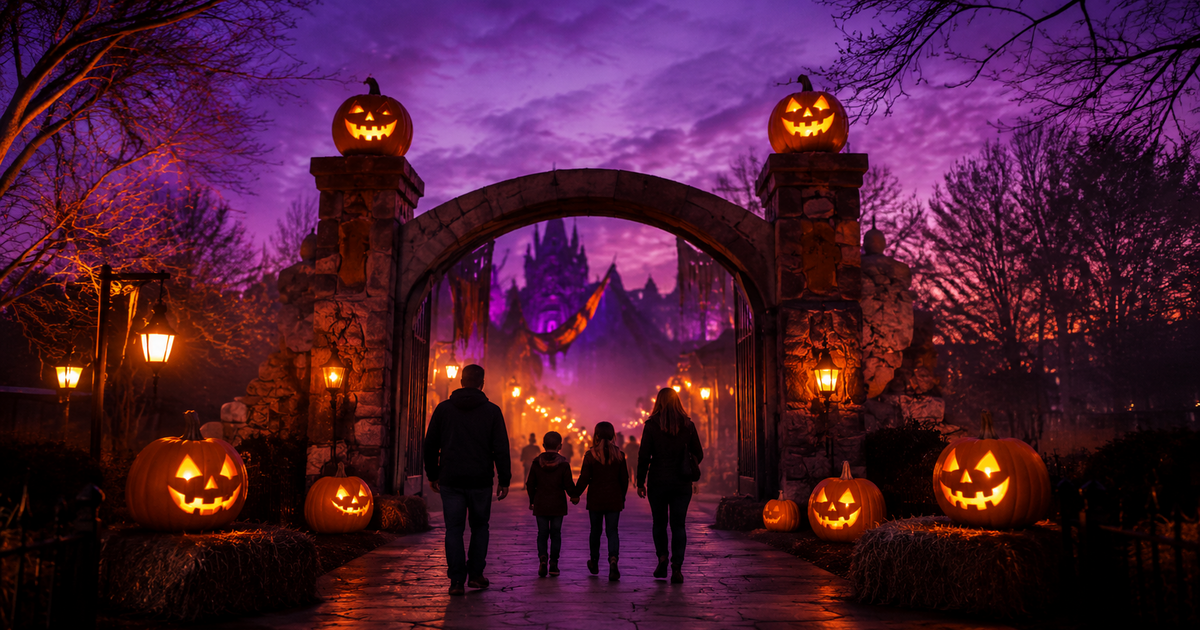
Best Haunted Houses for Kids: The Complete Family-Friendly Frights Guide
The best haunted houses for kids are “not-so-scary” or family-friendly attractions that deliver Halloween fun without intense gore, live jump-scare actors, or adult horror themes. Look for venues that offer dedicated children’s sessions with reduced scares, toned-down lighting, friendly costumed characters, and age-appropriate theming. Most professional haunted attractions offer family matinee hours for this purpose.
Can Kids Go to Haunted Houses? Understanding the Options
The answer parents most want to hear: yes, kids can absolutely experience the fun of Halloween haunts — you just need to choose the right type of attraction and the right time slot. The haunted attraction industry has evolved significantly, and most quality venues now offer deliberate family-friendly programming alongside their adult experiences.
The key distinction is between a standard haunted house (designed to maximize fear for adults and teens, featuring intense jump scares, gore, strobe lighting, and dark themes) and a family-friendly or “not-so-scary” haunt (designed specifically for children, with friendly characters, spooky-but-fun theming, and minimal genuine fear triggers). Both types exist, and understanding which one you’re looking for before you arrive will save everyone — parent and child alike — a lot of stress.
What Makes a Haunted House Kid-Friendly?
When evaluating haunted attractions for younger visitors, look for these specific features:
- Dedicated children’s sessions or matinees: Many professional haunts offer early-evening or weekend-afternoon timeslots with scaled-back scares, friendly actors, and no strobe lighting. These are structurally different from the adult sessions, not just “less intense” versions of the same experience.
- No live actors in jump-scare roles: Some family haunts replace costumed scare actors with static props, friendly characters, or interactive storytelling — removing the unpredictability that most frightens young children.
- Clear age recommendations: Reputable attractions list age minimums or recommendations on their websites. A haunt that says “recommended for ages 8 and up” versus one that says “13 and up” is telling you something meaningful.
- Outdoor formats: Corn mazes, hayrides, and pumpkin patches with mild Halloween theming are naturally more manageable for young children than enclosed indoor experiences, simply because there’s an easy visual exit and more open space.
- Separate child-specific programming: Look for “Boo Haunt,” “Spooky Farm,” “Not-So-Scary,” or similar named children’s events — these signal deliberate programming design for younger audiences.
Age Guide: When Are Kids Ready for Haunted Houses?
There’s no universal answer, but here are practical frameworks based on child development and what professional haunters typically recommend:
Ages 3–5: Pumpkin Patches & Fall Festivals Only
At this age, the separation between “pretend scary” and “real scary” isn’t fully developed. Haunted corn mazes, dark walk-throughs, and scare actors can genuinely traumatize very young children. Stick to pumpkin patches, fall harvest festivals, trick-or-treating, and daytime Halloween carnival events. The goal at this age is building positive Halloween associations, not introducing fear.
Ages 6–8: Gentle Not-So-Scary Haunts
Children in this range can handle low-level spooky theming, friendly costumed characters, and mild surprises — but not jump scares, gore, or darkness-based fear. Family matinee sessions at professional haunts are ideal. Look specifically for events marketed to this age group, such as Knott’s “Spooky Farm” (daytime, pre-Scary Farm hours), Disney’s Not-So-Spooky events, or local haunts with specific “family hours” timeslots listed on their sites.
Ages 9–12: Transitional — Know Your Kid
This is the most variable age range. Some 9-year-olds are ready for a real haunted house and will love it; others will have nightmares for weeks. The right approach: go together as a family to a mid-intensity haunt on a weeknight (shorter lines = less sustained stress if they want to leave), let the child lead the decision-making within the experience, and have a clear “we can leave anytime” agreement in place before you enter. If your child actively wants to be scared and enjoys horror in age-appropriate contexts (scary books, mild horror games), they’re likely ready.
Ages 13 and Up: Full Haunted House Access
Most professional haunted houses are designed for the 13-and-up audience. At this age, shared scare experiences with friends and family are social bonding events — one of the most positive uses of the haunted attraction format. A teenager who can choose their own Halloween plans should absolutely be given the opportunity to experience a professional haunt.
The Best Types of Kid-Friendly Halloween Attractions
Haunted Hayrides
Haunted hayrides are often the ideal first haunted experience for children aged 6–10. You’re seated on a moving wagon, which means your child has a physical anchor (the hayride itself, surrounded by family) rather than navigating a dark walk-through alone. The scares come to you rather than surrounding you. Many hayride experiences can be paused or abandoned more easily than enclosed indoor haunts, and the open-air format prevents the claustrophobic intensity of dark indoor mazes.
Farm-Based Fall Festivals with Mild Haunted Elements
Agricultural fall festivals — think corn mazes, pumpkin picking, apple orchards with Halloween theming — combine genuine Halloween fun with family-friendly formats. Anderson Farms in Erie, Colorado is a prime example: their Fall Festival is separate from the adult Terror in the Corn and offers hayrides, games, and activities appropriate for all ages. Search your state’s farm festival listings for similar venues in your area.
Theme Park Family Halloween Events
Several major theme parks offer dedicated family Halloween experiences alongside (or separate from) their adult events. Knott’s Berry Farm runs “Spooky Farm” during daytime hours before Scary Farm begins. Walt Disney World’s Mickey’s Not-So-Scary Halloween Party is specifically designed for families with young children — candy, character meet-and-greets, and Halloween parades with zero jump scares. These events carry a premium price but offer exceptional production quality in a completely controlled environment.
Community Haunted Houses & School Fundraiser Haunts
Don’t overlook locally operated community haunts — church events, school fundraiser haunts, and municipal Halloween attractions. These are typically lower intensity than professional venues and often explicitly designed with families in mind. They’re also significantly cheaper, typically $5–$15 per person, and are often operated in familiar community spaces that children feel comfortable in.
Tips for Taking Kids to Haunted Houses
Preparation matters. If your child has never experienced a haunt, talk through what will happen beforehand: costumed actors will try to scare you, it will be dark, there will be loud noises. Normalize the experience by framing it as a game — “we’re trying to get through without screaming!” — rather than a passive experience. Children who feel some agency and predictability handle novel fear much better than those who are surprised by everything.
Know your exit strategy. Before entering any haunt with a child, identify where the exits are and communicate clearly that leaving is always an option. Children who feel trapped have genuinely bad experiences; children who know they can exit anytime are far more willing to push through momentary fright.
Timing is everything. The first-of-the-season opening weekend is the worst time to bring a nervous child — lines are long, crowds are large, and the sensory overwhelm is maximized. A midweek evening in early October, or an afternoon session at a family-friendly event, is ideal for managing the experience.
Not sure about your child’s readiness? See our age-by-age guide to haunted house safety for kids.
Frequently Asked Questions
What age can kids go to haunted houses?
For family-friendly “not-so-scary” haunts and farm festivals, ages 5 and up are generally appropriate. For mild professional haunts with family matinee sessions, ages 7–8 and up. For standard adult professional haunted houses, most experts and attraction operators recommend 13 and older. Know your individual child — some 10-year-olds are ready; some 14-year-olds are not.
What’s the difference between a not-so-scary haunt and a regular haunted house?
A not-so-scary haunt features friendly costumed characters (no jump-scare tactics), reduced or no strobe lighting, age-appropriate theming (spooky but not gory), and brighter environments. A standard haunted house is designed to maximize fear through surprise, darkness, gore aesthetics, and intense actor performances. The two experiences are structurally different, not just different intensities of the same thing.
Are theme park Halloween events appropriate for young kids?
Disney’s Mickey’s Not-So-Scary Halloween Party is explicitly designed for young children and is appropriate from age 3 up. Knott’s Spooky Farm (daytime) is family-friendly. However, adult theme park Halloween events — Halloween Horror Nights, Howl-O-Scream, Six Flags Fright Fest after dark — are NOT appropriate for young children and are designed for teens and adults.
Can I find kid-friendly haunted houses near me?
Yes. The HauntHarvester Directory lets you filter haunted attractions by “family-friendly” or “not-so-scary” category across all 50 states. Most state haunt directory sites (ohiohauntedhouses.com, pahauntedhouses.com, etc.) also include a kid-friendly filter. Always call or check the venue’s website to confirm whether they offer dedicated family-friendly sessions before arriving with young children.
Find family-friendly haunted houses near you in the HauntHarvester Directory — searchable by state, intensity level, and kid-friendly rating. Updated each season with the latest attraction information.
As an Amazon Associate we may earn commission from qualifying purchases at no extra cost to you.
new in halloween animatronics
Our honest Spirit Halloween Mr. Dark review: a black-robed skeleton that pops up to nearly nine feet on a scissor lift for $370.99. We score it 3.9 of 5.
Our honest Spirit Halloween Electrified Corpse review: a wire-wrapped torso that violently shakes and screams overhead for $149.99. We score it 3.4 of 5.
Our honest Spirit Halloween Wind-Up Wally review: a creepy wind-up clown with a 360-degree spinning key and a pop-up scare for $185.99. We score it 3.5 of 5.
Find Haunted Houses in:
trending in haunt industry
Everything you need to know about East Coast Haunters Convention 2026 — dates, location, what to expect, haunt tours, seminars, and how to get tickets before prices increase.
HalloweenCostumes.com's 2026 Fan Design Program lets you design a real Halloween animatronic. Two winners get 10 props each plus 5% revenue. Submissions close April 30.
ShudderCon 2026 runs April 25–26 at Camp Jordan Arena in East Ridge, TN. Tickets from $15–$75. Here's the full preview for horror fans, haunt pros, and scare actors.