

How to Store Halloween Animatronics So They Last for Years
To store Halloween animatronics, clean them, remove the batteries, and let them dry completely, then loosen or remove any fabric and pack each piece in a sealed bin with the head and moving parts cushioned. Keep them somewhere cool, dry, and climate-stable – not a damp basement or a scorching attic – because moisture and temperature swings are the leading causes of animatronic failure. Done right, a good animatronic lasts many seasons.
The fastest way to ruin a $300 animatronic is to shove it in a trash bag and toss it in the garage until next October. Motors seize, foam crumbles, fabric mildews, and the electronics that made it worth buying corrode. Proper off-season storage is the single biggest thing that decides whether your props last two seasons or ten – and it costs almost nothing. Here is how to pack them away so they power up like new next year.
Why Does Proper Animatronic Storage Matter So Much?
Animatronics are essentially costumed robots: a motor, a control board, wiring, speakers, and sensors wrapped in foam and fabric. Every one of those parts has an enemy, and it is almost always moisture. Damp air corrodes contacts and rusts motor components; trapped humidity breeds mildew in fabric and foam; and big temperature swings make plastics brittle and can crack molded faces. Pests are the other quiet threat – mice love the foam and will chew wiring for nesting material. Store a prop badly and you often will not know until it refuses to move on launch night. The good news is that all of these failure modes are preventable with a dry container and a stable spot, which is why storage is worth as much attention as where you place the prop in your yard. If you are still deciding what to buy, our 2026 Halloween animatronics buyer’s guide flags which pieces hold up best over time.
How Do You Store Halloween Animatronics Step by Step?
Do this at the end of the season while you still remember how each piece comes apart.
Step 1 – Clean and fully dry each piece
Wipe down the body with a dry or barely-damp cloth to lift dust, cobwebs, and any yard debris, and spot-clean fabric if it needs it. The critical part is drying: any prop that lived outside has absorbed humidity, so let it air out indoors for a day or two before it goes in a bin. Sealing in moisture is what causes mildew.
Step 2 – Remove the batteries
Always pull the batteries before storage. Batteries left in a prop for a year can leak and corrode the contacts, which is one of the most common reasons an animatronic will not turn on the next season. Store loose batteries separately and label dead ones.
Step 3 – Protect the head, motor, and moving parts
The head and any articulated joints are the most fragile and expensive parts to replace. Wrap the head in a soft cloth or bubble wrap, and never store a prop with weight pressing on its face or arms. If the motor housing is exposed, keep it away from anything that could snag or bend it.
Step 4 – Loosen or remove fabric and costuming
Where you can, take off removable robes, wigs, and cloth and fold them separately, ideally in a breathable bag rather than crushed against plastic. Fabric packed tight and damp is where mildew and musty smells start.
Step 5 – Pack in a sealed, rigid bin
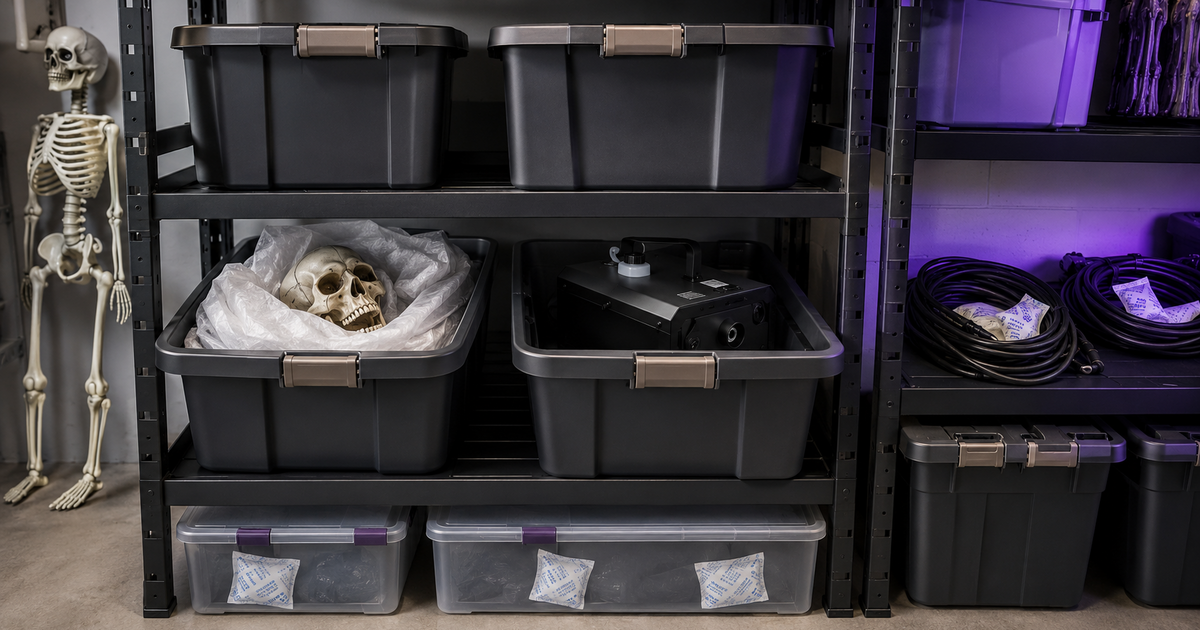
Use a hard plastic tote with a tight lid rather than a cardboard box (which absorbs moisture and attracts pests) or a thin trash bag (which traps condensation). A rough estimate is $10 to $25 for a good large tote. Add a couple of silica-gel or moisture-absorber packs, cushion around the head and limbs, and avoid overstuffing so nothing is bent for a year.
Step 6 – Label and log
Tape a label on each bin with the prop name and note anything that needs attention next year (a squeaky motor, a flickering LED). Future-you will thank present-you when you are setting up in the dark next October.
Where Is the Best Place to Store Animatronics?
Container matters, but location matters just as much.
Aim for cool, dry, and stable
The ideal spot holds a steady, moderate temperature and low humidity – an interior closet, a conditioned spare room, or a dry, insulated basement. What you want to avoid is extremes: unconditioned attics can bake past temperatures that warp plastic and degrade adhesives, while damp basements and sheds invite mildew and rust.
Keep bins off the floor and sealed against pests
Set totes on shelves or pallets rather than directly on concrete, which wicks moisture, and make sure lids seal so mice cannot get in. For very large pieces like giant skeletons or 8-foot-plus figures that will not fit a bin, break them down as far as they allow, wrap the sections, and stand them where nothing will lean on them – our look at giant animatronics over 8 feet tall shows just how much space these can demand.
How Do You Get Animatronics Ready for Next Season?
Storage and setup are two ends of the same habit. When you unpack in the fall, put in fresh batteries, test every prop before placement so you have time to troubleshoot, and check that motors move freely and speakers sound clean. Anything that struggled the previous year gets attention now, not on Halloween morning. If you are expanding your display, plan the layout before you place heavy pieces, and build your season around a strong core – our overview of Halloween animatronics is a good place to start.
Frequently Asked Questions
How should I store Halloween animatronics over the off-season?
Clean and fully dry each prop, remove the batteries, cushion the head and moving parts, loosen or remove fabric, and pack everything in a sealed rigid tote with moisture absorbers. Keep the bins somewhere cool, dry, and temperature-stable.
Can I store animatronics in the garage or attic?
Only if it stays dry and does not hit temperature extremes. Unconditioned attics can get hot enough to warp plastic, and damp garages or basements invite rust and mildew. A sealed tote plus moisture packs helps a lot in an imperfect space.
Do I really need to take the batteries out?
Yes. Batteries left in for a year can leak and corrode the contacts, which is one of the most common reasons an animatronic will not power on the next season. Remove and store them separately.
How do I keep mice out of my stored props?
Pack props in hard-sided totes with tight lids instead of cardboard or bags, keep bins off the floor, and avoid leaving food or nesting material nearby. Mice chew foam and wiring, so a sealed container is your best defense.
How long do Halloween animatronics last if stored well?
There is no fixed number, but proper storage is what separates props that last many seasons from ones that fail after one or two. Keeping moisture, pests, and temperature swings away from the electronics is what extends their life.
Building a collection worth protecting? Compare picks in our 2026 animatronics buyer’s guide, then explore the full world of Halloween animatronics.

As an Amazon Associate we may earn commission from qualifying purchases at no extra cost to you.
new in halloween animatronics
Home Depot's 11 ft Giant Mummy animatronic (2026) is a poseable under-$300 yard giant. See its specs, price, where to buy it, and whether it is worth it.
Spirit Halloween's Trash Bandit is a 3 ft 7 in radioactive-raccoon animatronic for 2026 at $149.99, with a pop-up scare, growls, and glowing blacklight decay.
Home Depot's John the Last Call Mixologist is a 6 ft animated bar skeleton for 2026 at about $179. See what it does, where to buy it, and if it is worth it.
Find Haunted Houses in:
trending in haunt industry
Everything you need to know about East Coast Haunters Convention 2026 — dates, location, what to expect, haunt tours, seminars, and how to get tickets before prices increase.
HalloweenCostumes.com's 2026 Fan Design Program lets you design a real Halloween animatronic. Two winners get 10 props each plus 5% revenue. Submissions close April 30.
ShudderCon 2026 runs April 25–26 at Camp Jordan Arena in East Ridge, TN. Tickets from $15–$75. Here's the full preview for horror fans, haunt pros, and scare actors.