
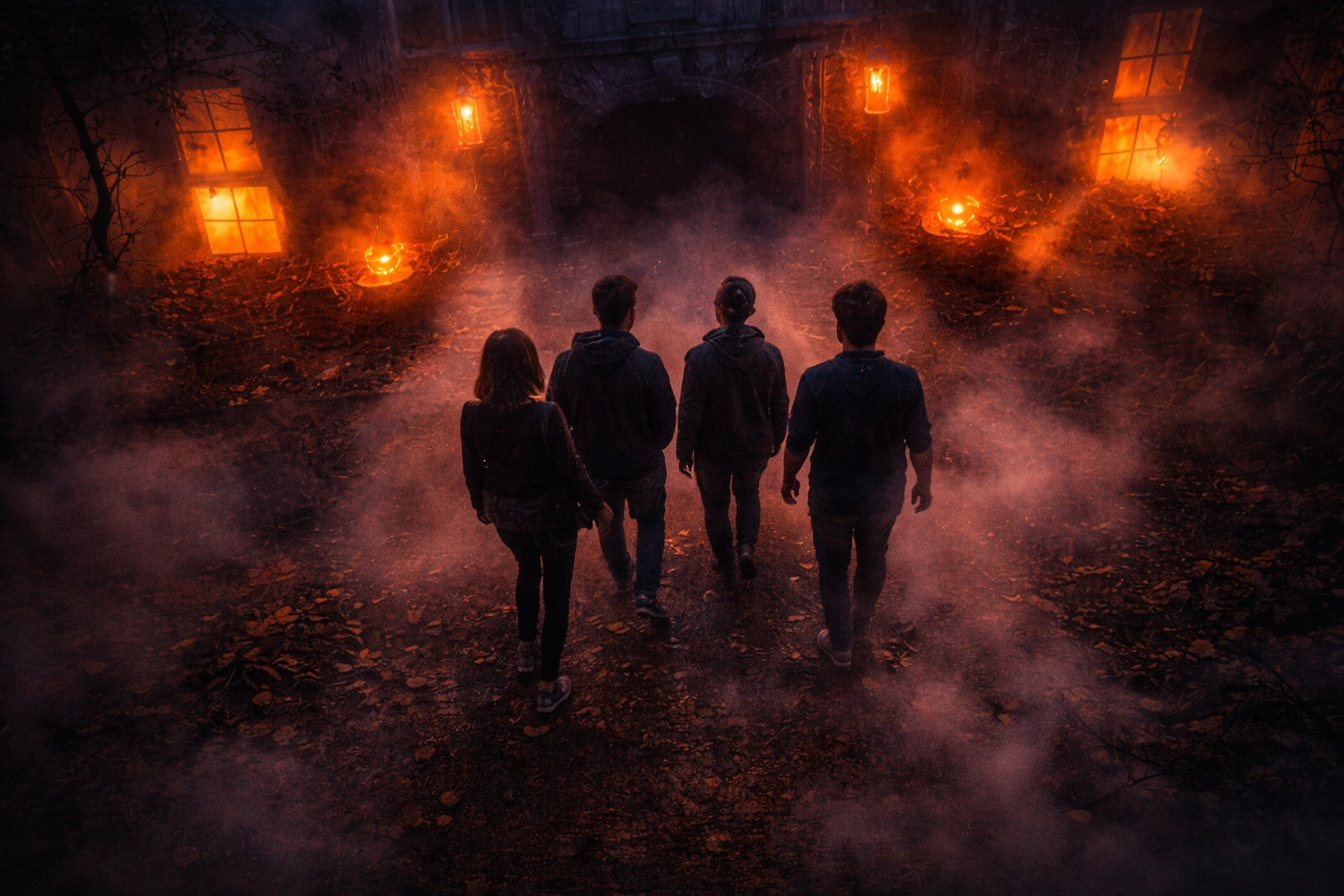
What to Wear to a Haunted House: The Complete Guide
Most people spend all their energy choosing which haunted house to visit — then show up in the wrong shoes and spend half the night limping instead of screaming. What you wear to a haunted house matters more than most first-timers expect. These attractions are dark, cramped, often wet, and built to disorient you at every turn. The right outfit keeps you comfortable and in the moment. The wrong one turns a two-hour thrill into a miserable slog.
The One Rule That Overrides Everything: Closed-Toe Shoes
If there is a single non-negotiable rule for haunted house attire, it is this: wear closed-toe shoes. Flip-flops, open sandals, and slides are a liability inside a professional haunted attraction. You will be walking across surfaces that range from wet concrete to uneven terrain to fog-machine-slicked floors, almost always in near-complete darkness. Stumbling is not a matter of if — it is a matter of when. The only variable is whether your feet are protected.
Comfortable athletic shoes or sneakers are the gold standard. They provide grip, ankle support, and enough cushioning for extended walking. If you are visiting an outdoor haunt, corn maze, or trail event, consider shoes with ankle reinforcement. What to avoid entirely: heels, slip-on shoes that can come off mid-run, and anything expensive you would be upset to ruin.
Clothing: Prioritize Movement Over Style
Haunted houses are physical environments. You will be moving quickly, ducking through tight spaces, and potentially running through corridors. Prioritize comfort and mobility over making a fashion statement.
What Works Best
- Form-fitting or close-cut clothing — nothing baggy or flowing that can catch on props or get grabbed by actors
- Layers for outdoor haunts — temperatures drop sharply after dark in October; a light jacket that fits in a pocket is the smart call
- Dark colors — they photograph well in low light and you will feel less self-conscious
- Moisture-wicking fabrics — adrenaline and close quarters generate heat fast
What to Avoid
- Full-length skirts or wide-leg pants — trip hazards in dark, narrow hallways
- Delicate or dry-clean-only fabrics — haunts are rough environments
- Anything you would be upset to get dirty, wet, or fog-machine-damp
Halloween Costumes at Haunted Houses: Yes — With One Exception
Costumes are welcome at most professional haunted attractions. The one hard restriction you will find universally enforced: full-face masks are prohibited. This is a security measure, not a fun-police policy. Staff need to be able to see guest faces in case of an emergency or an incident inside the attraction. Face paint and partial costumes work perfectly — full-face masks do not.
The best costume choices for a haunted house visit are minimal and functional. Face paint rather than masks, costumes without trailing fabric, and accessories that stay secured without needing to be carried. Avoid large props, fake weapons, or anything that needs to be held — they become burdens the moment the first jump scare hits.
What Not to Bring Inside
Keep it minimal. Every item you bring in is one more thing to lose in the dark or manage while being chased through a terrifying corridor.
| Leave Behind | Why |
|---|---|
| Large purses or backpacks | Most haunts prohibit them; those that allow them require you to check them at the entrance |
| Expensive jewelry | Can catch on props or simply disappear in the chaos |
| Glow sticks or flashlights | Almost universally prohibited — breaks immersion for other guests |
| Umbrellas | Become a hazard in crowded, dark spaces |
| Outside food or drinks | Prohibited at most venues |
The essentials: phone in a pocket (not in your hand), ID, and a card or small amount of cash if the venue sells merchandise or food outside the attraction.
Outdoor Haunts and Weather: Dress for What’s Real, Not What You Hope For
If you are visiting an outdoor haunted trail, scream park, or hayride experience, dress for actual conditions. After 9 PM in October, temperatures in most of the country drop significantly. A windbreaker or light jacket makes the difference between a great night and a miserable one. Check the venue’s bag policy before assuming you can bring a backpack inside — most outdoor haunts still restrict them during the experience itself.
If there is any chance of rain, waterproof or water-resistant shoes become a meaningful upgrade. Some outdoor haunts operate in light rain, and the ground conditions inside them get noticeably worse when they do.
Quick Pre-Visit Checklist
- Closed-toe shoes with grip — checked
- Comfortable, form-fitting clothing — checked
- No full-face mask if wearing a costume — checked
- Phone secured in a pocket, not in hand — checked
- Large bags left at home or in the car — checked
- Layers if the venue has outdoor sections — checked
Frequently Asked Questions
Can I wear a Halloween costume to a haunted house?
Yes — costumes are welcome at most haunted attractions. The one restriction: full-face masks are almost universally prohibited for security reasons. Stick to face paint or partial costumes, and avoid long trailing fabrics or large props.
What shoes are best for a haunted house?
Closed-toe sneakers or athletic shoes with good grip are the best choice. Avoid heels, open-toed sandals, flip-flops, or anything slippery. Haunted house floors are often uneven, wet, or fog-machine-damp.
Do haunted houses have dress code rules?
Most professional haunts do not have formal dress codes, but virtually all prohibit full-face masks, and many restrict large bags. Check the specific venue’s website before visiting.
What should I not bring to a haunted house?
Leave large purses, backpacks, glow sticks, flashlights, umbrellas, and expensive accessories at home or in your car.
Ready to find your next haunted house experience? Browse haunted attractions near you on the HauntHarvester directory — with fear-level ratings, visitor reviews, and ticket links for hundreds of venues across the country.
Latest Video

haunt your inbox
Sign up for exclusive news, spooky updates, and more.