

Can Haunted House Actors Touch You? The No-Touch Rule Explained
At the vast majority of haunted houses, actors are not allowed to touch you, and you are not allowed to touch them. This mutual no-touch policy is the industry standard, posted at the entrance and enforced for everyone’s safety. The exception is a small number of extreme or full-contact haunts, which are always clearly advertised in advance and require you to sign a waiver and give explicit consent before entering.
It is one of the most common questions nervous first-timers ask before stepping into the dark: are the monsters allowed to grab me? The reassuring answer is that at a standard haunted attraction, the actors will get terrifyingly close but will not lay a hand on you. Here is how touching rules actually work, why they exist, and how to recognize the rare haunts where the rules are different.
Can Haunted House Actors Touch You?
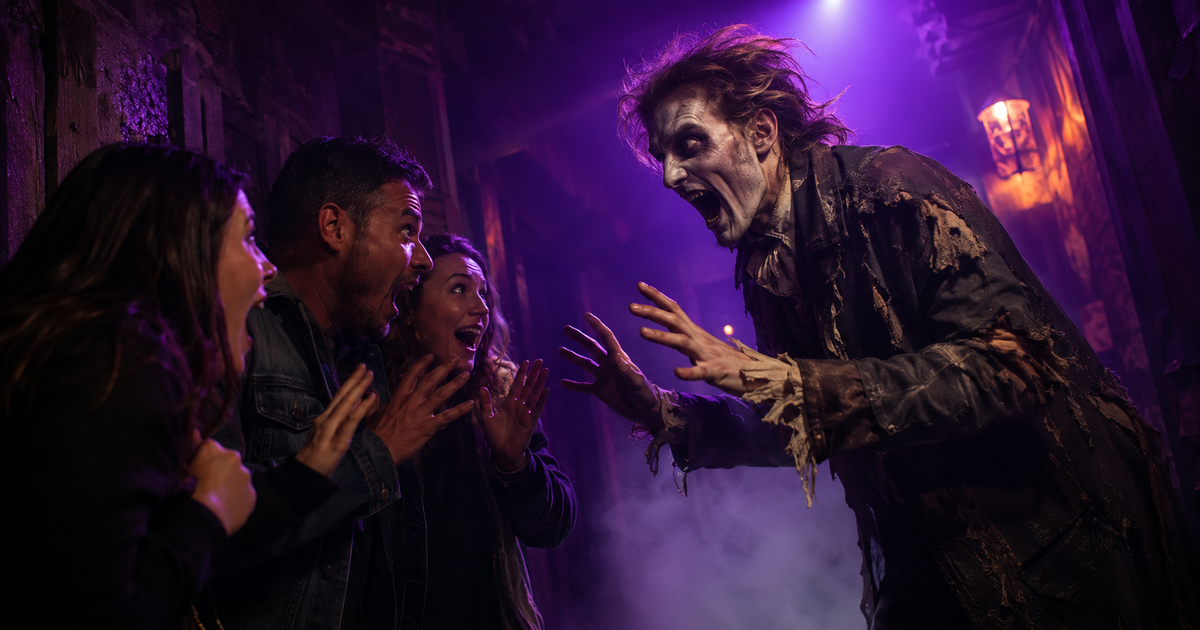
For the great majority of haunted attractions, the answer is no. Most haunts operate a strict no-touch policy that runs in both directions: actors are trained not to make physical contact with guests, and guests are told at the entrance not to touch the actors. The scare is built entirely from proximity, timing, sound, and the illusion of danger — an actor can lunge, loom over you, follow you, and get inches from your face without ever touching you, which is often scarier than contact would be.
The Gray Area: Light, Guided Contact
A smaller group of attractions allows very limited, guided contact — a brief tap on the shoulder or a light touch on the arm to startle you — but only within written guidelines and only by trained actors. Where this is permitted, contact is non-invasive, non-sexual, and kept away from sensitive areas. If you are unsure about a specific haunt’s policy, it is always posted at the entrance or available on the attraction’s website.
Why Most Haunts Have a No-Touch Policy
No-touch rules exist to protect everyone. They keep guests physically safe, protect actors from being struck by a startled visitor swinging on instinct, and shield the business from liability. A frightened person’s reflexes are unpredictable — a no-contact rule removes the split-second confusion about whether a grab is real, which is exactly the moment injuries happen. The two-way nature of the rule matters just as much: even if an actor is inches away, you must keep your hands to yourself, because striking an actor out of fear can get you removed and, in serious cases, has legal consequences.
What About Extreme and Full-Contact Haunts?
A niche category of extreme or full-contact haunts does allow aggressive physical interaction — grabbing, restraint, being separated from your group, or being moved through the attraction. These experiences are the exception, not the rule, and they are never a surprise. Full-contact haunts advertise the contact explicitly, require participants to be adults, and use signage and signed waivers to obtain consent before you enter. They also operate under tighter supervision and safety protocols and typically offer a safe word. If you are visiting a mainstream Halloween haunt, you will not accidentally end up in one of these — they are sought out deliberately by thrill-seekers who want that intensity.
How to Tell Which Kind You’re Visiting
The type of haunt is almost always obvious before you buy a ticket. Standard attractions promote family or teen-friendly scares and post no-touch rules; extreme haunts market their contact and waiver requirements front and center. When in doubt, read the attraction’s rules page or call ahead — reputable haunts make their contact policy easy to find.
What to Do If an Actor Crosses the Line
At a no-touch attraction, unwanted or inappropriate contact is not part of the show and should be reported immediately. Tell the nearest staff member or find a manager at the exit; reputable haunts take these reports seriously because their reputation depends on it. Knowing the policy before you enter also helps you stay calm — if you understand that the looming figure cannot touch you, the scare becomes a thrill rather than a genuine alarm. Going with a group and reviewing the posted rules on the way in are the simplest ways to keep the experience fun and firmly in your control.
Frequently Asked Questions
Do haunted houses touch you?
Most do not. The standard policy is no touching in either direction — actors will not touch you, and you must not touch them. Only clearly advertised extreme haunts allow contact.
Can you touch the actors at a haunted house?
No. Touching, pushing, or striking an actor is prohibited at nearly every attraction and can get you removed or lead to legal trouble. Keep your hands to yourself even when startled.
Are there haunted houses where they can grab you?
Yes, extreme or full-contact haunts allow grabbing and restraint, but they are always advertised in advance and require adult participants to sign a waiver and consent before entering.
What happens if I hit a haunted house actor?
Striking an actor, even out of fear, can result in immediate ejection without a refund and, in serious cases, legal consequences. That is a key reason the no-touch rule applies to guests too.
How do I know a haunted house’s touching policy?
Policies are posted at the entrance and usually on the attraction’s website. If you are unsure, check the rules page or call ahead before buying tickets.
Know the rules, enjoy the scare. Brush up on haunted house etiquette, see whether haunts are right for you in our haunted house safety guide, then find a haunted house near you.
new in halloween animatronics
Our Spirit Halloween Emily Corpse Bride review: a $315.99 licensed, life-size animatronic scored 3.9/5 for servo motion, film dialogue, build and presence.
How much do Halloween animatronics cost? A price guide by size and type, from under-$50 props to $700 giants, with what drives the price and how to save.
A first look at Grandin Road's Halloween Haven 2026: premium animatronics, witches, and lit yard pieces from $69 to $699, plus which pieces to buy first.

Paid link: As an Amazon Associate we may earn commission from qualifying purchases at no extra cost to you.
Find Haunted Houses in:
trending in haunt industry
Everything you need to know about East Coast Haunters Convention 2026 — dates, location, what to expect, haunt tours, seminars, and how to get tickets before prices increase.
HalloweenCostumes.com's 2026 Fan Design Program lets you design a real Halloween animatronic. Two winners get 10 props each plus 5% revenue. Submissions close April 30.
ShudderCon 2026 runs April 25–26 at Camp Jordan Arena in East Ridge, TN. Tickets from $15–$75. Here's the full preview for horror fans, haunt pros, and scare actors.