

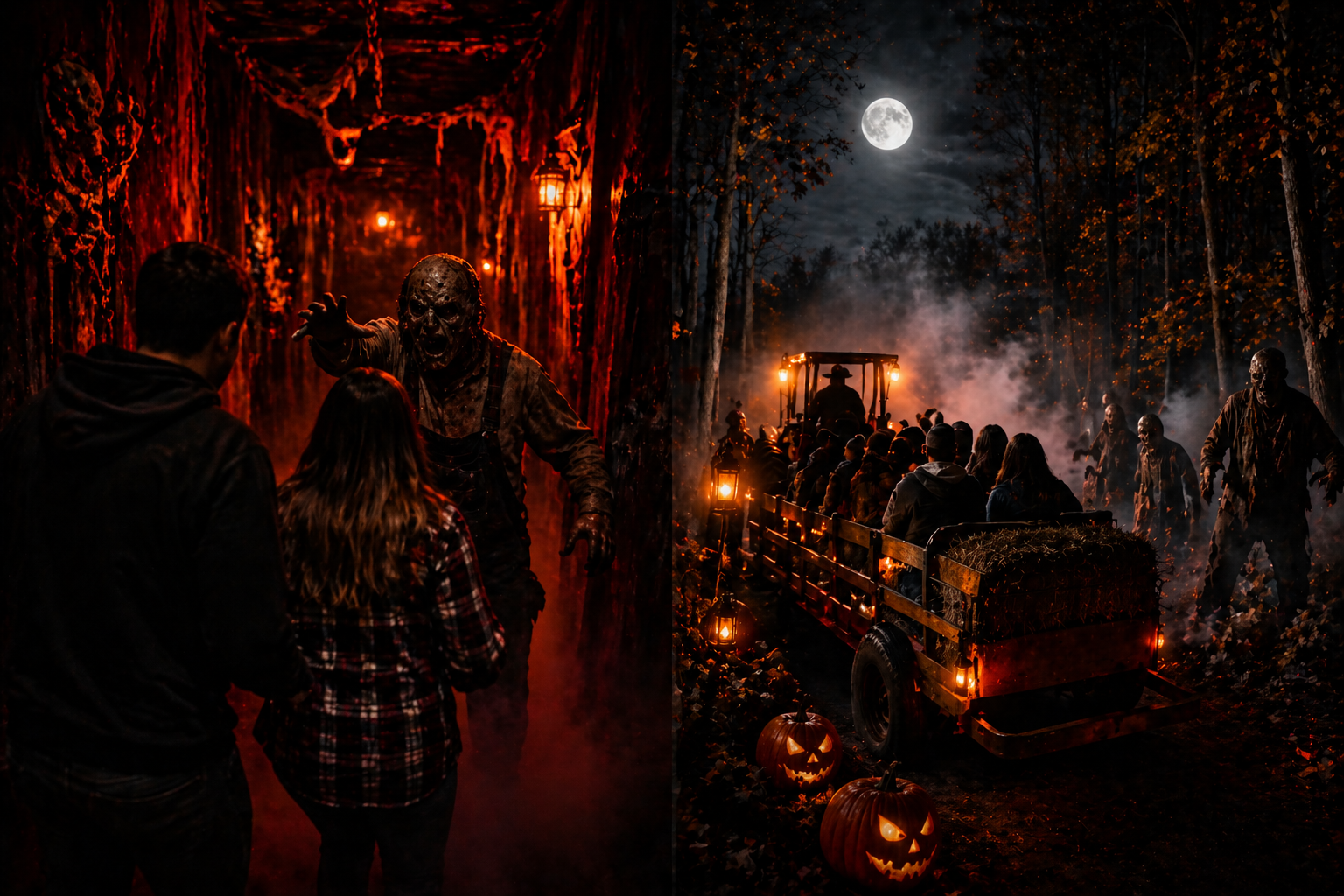
Haunted House vs Haunted Hayride: Which Is Right for You?
A haunted house is a walk-through indoor attraction where actors and special effects create an intense, immersive scare experience in enclosed spaces. A haunted hayride is an outdoor wagon or tractor-pulled ride through a themed haunted trail, typically offering a more relaxed, social scare in the open air. Haunted houses tend to be scarier and more intense, while haunted hayrides are better suited for groups, families, and those who prefer a less claustrophobic setting.
Every October, millions of Americans face the same Halloween dilemma: haunted house or haunted hayride? Both are beloved autumn traditions, but they deliver wildly different experiences. Choosing the wrong one for your group can mean a miserable night — or a missed opportunity for an unforgettable scare. This guide breaks down everything you need to know about haunted houses vs haunted hayrides so you can make the right call.
What Is a Haunted House?
A haunted house is a professionally designed walk-through attraction where visitors move through a series of themed rooms, corridors, and sets populated by costumed actors, animatronics, special lighting, fog effects, and theatrical scares. The defining characteristic is the enclosed environment — you’re inside, with walls around you and a path you must follow to reach the exit.
Haunted houses range enormously in production value. At the top end, attractions like Netherworld in Atlanta or Haunted Overload in New Hampshire invest hundreds of thousands of dollars in custom sets, Hollywood-caliber makeup, and professional sound design. At the local end, community haunts run by volunteer fire departments or charity groups offer a more modest but still genuinely spooky experience.
The typical haunted house experience lasts between 15 and 45 minutes, depending on the size of the attraction and how quickly your group moves through. You’ll walk through the space on foot, meaning the scares are immediate and personal — actors can get right in your face, jump from hidden spots, or chase you through darkened corridors.
What Is a Haunted Hayride?
A haunted hayride is an outdoor Halloween attraction where guests ride on a wagon — typically pulled by a tractor — through a haunted trail or wooded property decorated with scenes, actors, and set pieces. Unlike a haunted house, you experience the whole thing while seated on a moving vehicle, which changes the nature of the scares entirely.
Hayrides tend to be more theatrical and cinematic. Operators create elaborate scenes along the trail — a zombie outbreak in a cornfield, a chainsaw-wielding maniac in a clearing, a graveyard staffed by ghouls — and your wagon rolls past each one. Actors may approach the wagon, reach in, or chase alongside it, but the physical separation between guests and performers is generally greater than in a haunted house.
The experience typically lasts 20 to 40 minutes and accommodates larger groups per ride. Many hayride venues are destination events with additional activities like bonfires, pumpkin patches, food vendors, and corn mazes, making them more of an evening outing than a focused scare attraction.
Key Differences at a Glance
- Environment: Haunted house = enclosed, indoor. Haunted hayride = outdoor, open air.
- Movement: Haunted house = you walk at your own pace. Haunted hayride = you ride on a moving vehicle.
- Scare delivery: Haunted house = actors in your personal space. Hayride = scenes you pass by.
- Group size: Haunted house = typically 2–8 people per group. Hayride = wagon holds 20–50+ people.
- Weather: Haunted house = mostly weather-proof. Hayride = weather dependent.
- Additional activities: Hayrides often include bonfires, corn mazes, and fall festivals.
Scare Level: Which Is Scarier?
Generally speaking, haunted houses are scarier — especially at the professional level. The enclosed environment removes your ability to escape or look away. Actors can get within inches of your face, the darkness is disorienting, and the confined spaces heighten your anxiety and startle response. Extreme haunted houses, which involve physical contact, intense actors, and disorienting set design, represent the absolute top of the fear spectrum.
Haunted hayrides are typically less intense on a pure scare scale, but they’re not without genuine frightening moments. A well-designed hayride with quality actors can deliver excellent jump scares, and the vulnerability of sitting on an open wagon in the dark has its own psychological weight. The unpredictability of what might emerge from the treeline is a genuine source of dread.
If raw fear intensity is your goal, haunted houses win. If you want a fun, spooky atmosphere without the full sensory assault, hayrides are the better choice.
Group Size and Social Experience
Haunted hayrides have a clear advantage for large groups. Because the wagon holds 20 to 50+ people, everyone rides together, laughs together, and screams together. It’s a highly communal experience that’s especially great for office Halloween events, school groups, youth organizations, and friend groups of varying scare tolerance levels.
Haunted houses split large groups into smaller pods that move through one at a time, so groups of 10 or more may not all experience the attraction together. That said, the smaller group format of a haunted house creates a more intimate and genuinely frightening experience — you can’t hide behind 30 other people.
Weather and Outdoor Factors
This is one of the most practical considerations and often gets overlooked. Haunted houses are almost always indoors, making them a reliable choice regardless of October weather. Haunted hayrides are outdoors, which means cold temperatures, potential rain, and muddy conditions are real factors. Many operators cancel or modify hayrides in severe weather, so always check cancellation policies before you book.
On the flip side, a haunted hayride on a crisp, clear autumn night with stars overhead and the smell of woodsmoke is an atmospheric experience that no indoor attraction can replicate. When the weather cooperates, hayrides are a uniquely magical fall experience.
Price and Value
Pricing varies significantly by region and production quality. In general, haunted houses at the premium level run $25 to $50 per person, with VIP or fast-pass options pushing $60 to $100. Budget and charity haunts may charge $10 to $20. Haunted hayrides typically range from $15 to $35 per person, often with bundled pricing for additional activities like corn mazes and pumpkin patches.
If you’re factoring in the full evening’s entertainment, hayride venues with multiple activities often deliver better overall value for families. For the dedicated scare-seeker, a premium haunted house provides an unmatched concentrated experience worth every dollar.
Which Should You Choose?
Choose a haunted house if you want maximum scares, a focused intense experience, and don’t mind enclosed spaces. It’s the right choice for hardcore horror fans, small groups of thrill-seekers, and anyone who wants to test their nerve.
Choose a haunted hayride if you’re going with a large group, have members with claustrophobia, want a family-friendly or moderate scare level, or are looking for a full fall evening with multiple activities. Hayrides are also the better choice for first-timers who aren’t sure how they’ll react to a professional haunted attraction.
The best answer? Do both. Many haunted attraction venues offer both a walk-through haunted house and a hayride as part of a combo ticket, giving you the best of both worlds in a single night out.
Frequently Asked Questions
Is a haunted hayride or haunted house better for kids?
Haunted hayrides are generally better suited for younger children because the open, outdoor setting is less intense and claustrophobic than a walk-through haunted house. Always check the recommended age and scare rating before bringing children under 12 to either type of attraction. Many venues offer family-friendly versions of both.
Can you leave a haunted house if you get scared?
Yes — reputable haunted houses always provide a clear exit path and safe words like ‘safety’ or ‘exit’ that actors are trained to honor immediately. You can leave at any point. Haunted hayrides are slightly different since you’re on a moving vehicle, but operators always stop the wagon if a guest needs to exit for safety or distress reasons.
How long does a haunted hayride last vs a haunted house?
Most haunted hayrides run 20 to 40 minutes for the ride itself. Haunted houses typically take 15 to 45 minutes depending on the size and how quickly your group moves. When you factor in wait times, a popular haunted house on a weekend night can mean 60 to 90 minutes total from line to exit.
Are haunted hayrides scary?
Yes, haunted hayrides can be genuinely frightening, especially well-produced attractions with professional actors and elaborate scenes. They tend to be less intensely scary than top-tier haunted houses, but the outdoor darkness, unexpected appearances from the treeline, and atmospheric setting create real dread and excellent jump scares.
What should I wear to a haunted hayride?
Dress in warm, comfortable layers — hayrides are outdoors at night in October and temperatures can drop significantly. Wear closed-toe shoes, especially if the venue has a corn maze or walking areas. Avoid costumes with long trailing fabric or masks that restrict your vision, as these can be safety hazards on a moving wagon.
Ready to find a haunted house or hayride near you? Browse the Haunt Harvester Directory — the most complete guide to haunted attractions across the United States, with fear ratings, ticket links, and regional breakdowns to help you find the perfect Halloween scare.
new in halloween animatronics
Our honest Spirit Halloween 5 Ft 8 In Valak (The Nun) animatronic review: a $325.99 officially licensed lunging demon nun scored 4.0 out of 5 for scare.
Our honest Spirit Halloween LED Red and Black Jumping Spider review: a $49.99 motion-activated jump prop with light-up eyes, scored 3.3 out of 5 on value.
Home Depot's 12 ft Skelly sells out fast every year. See when it restocks in 2026, the $299 price, and how to buy the giant skeleton before it is gone.

Paid link: As an Amazon Associate we may earn commission from qualifying purchases at no extra cost to you.
Find Haunted Houses in:
trending in haunt industry
Everything you need to know about East Coast Haunters Convention 2026 — dates, location, what to expect, haunt tours, seminars, and how to get tickets before prices increase.
HalloweenCostumes.com's 2026 Fan Design Program lets you design a real Halloween animatronic. Two winners get 10 props each plus 5% revenue. Submissions close April 30.
ShudderCon 2026 runs April 25–26 at Camp Jordan Arena in East Ridge, TN. Tickets from $15–$75. Here's the full preview for horror fans, haunt pros, and scare actors.