

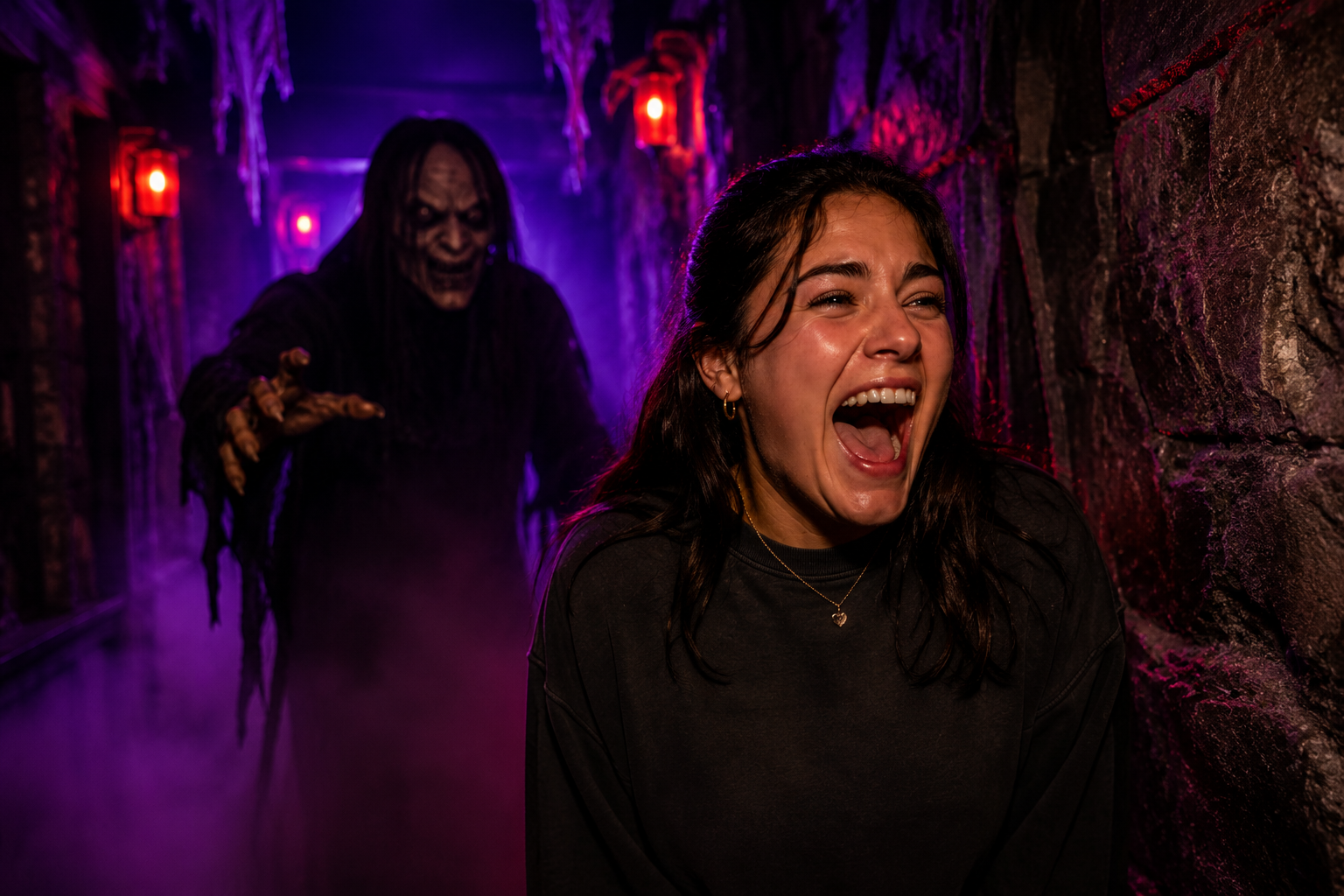
Why Do People Like Haunted Houses? The Psychology of Safe Fear
People like haunted houses because they deliver ‘safe fear’ — a genuine adrenaline rush without real danger. When your brain knows the chainsaw-wielding figure cannot actually hurt you, it lets you enjoy the flood of adrenaline, endorphins, and dopamine that fear triggers. Studies find many people leave a haunted house in a better mood and less anxious than when they went in, thanks to that controlled scare and the sense of accomplishment it creates.
It seems contradictory: we spend money and stand in line for the privilege of being terrified. Yet millions do it every October, and many come out grinning. The reason is not that haunt fans are wired differently — it is that a haunted house hijacks a very normal set of brain chemistry in a very enjoyable way. Here is the psychology of why being scared, on purpose, feels so good.
Why Do People Like Haunted Houses?
The core answer is safe fear. A haunted house simulates danger — sudden movement, looming figures, darkness, noise — while your rational brain knows you are not actually at risk. That gap between what your body feels and what your mind knows is the sweet spot. Your fight-or-flight system fires as if the threat were real, but because there is no real consequence, you get to experience the rush as a thrill rather than a trauma. It is the same reason roller coasters and scary movies are fun: controlled danger with a guaranteed safe ending.
The Science of ‘Safe Fear’
Psychologists describe the appeal of haunted attractions as voluntary, recreational fear. The key ingredients are that the fear is chosen, time-limited, and survivable. You opt in, you know it will end, and you know you will walk out unharmed. Within that safe container, the brain is free to treat the scare as play. Remove any of those conditions — make the danger real or open-ended — and the same experience becomes genuinely distressing. It is the safety net, not the absence of fear, that makes the fear enjoyable.
What Being Scared Does to Your Brain and Body
The moment something jumps out at you, your body enters fight-or-flight. Your heart races, your senses sharpen, and your brain releases a cocktail of chemicals: adrenaline for the surge of energy, endorphins that blunt discomfort and produce a natural high, and dopamine tied to reward and pleasure. These are the same chemicals involved in exercise, dancing, and other feel-good activities — which is why the aftermath of a good scare can feel a lot like a runner’s high.
The Relief Rush
Part of the pleasure comes after the scare, not during it. When the threat passes and your body realizes it was safe all along, the tension releases in a wave of relief and euphoria — often expressed as that burst of nervous laughter you hear echoing through every haunted house. That cycle of tension and release, repeated scare after scare, is deeply satisfying.
The Surprising Benefits of a Good Scare
Research suggests recreational fear can be genuinely good for you. Studies of haunted-attraction visitors have found that many people report better moods after going through, with decreased overall brain activity that points to a kind of mental reset, and fewer people feeling tired or anxious afterward than before they went in. Beyond the chemistry, a haunted house offers a controlled space to test your limits, face something frightening, and come out the other side — which builds a small but real sense of accomplishment. Doing it with friends adds a powerful social bond; shared fear and shared relief draw people closer, which is why haunts are such popular group outings.
Why Some People Love It and Others Don’t
Not everyone enjoys being scared, and that is normal. Sensation-seeking varies from person to person — some people get a bigger dopamine reward from novelty and intensity and actively crave it, while others find the same stimulation genuinely unpleasant. Personal history, anxiety levels, and how easily someone can hold on to the knowledge that they are safe all shape whether a scare reads as fun or as too much. If haunted houses are not your thing, it is not a character flaw — your brain simply weighs the risk-and-reward of fear differently, and there is nothing wrong with sitting one out.
Frequently Asked Questions
Why do people enjoy being scared?
Because voluntary, safe fear triggers a rush of adrenaline, endorphins, and dopamine without real danger. The brain treats the scare as play, and the relief afterward produces a feel-good high.
Is it healthy to go to haunted houses?
For most healthy people, yes. Research finds many visitors leave in a better mood and less anxious, and facing a controlled scare can build confidence. Those with heart conditions or severe anxiety should be cautious.
What chemicals does fear release in the brain?
A frightening experience releases adrenaline, endorphins, and dopamine — the same feel-good chemicals involved in exercise and other pleasurable activities, which is why a scare can feel euphoric.
Why do I laugh after being scared?
The laughter is a relief response. When your body registers that the threat has passed and you are safe, the built-up tension releases as euphoria, often expressed as nervous laughter.
Why do some people hate haunted houses?
People differ in sensation-seeking. Some brains find intense, novel fear rewarding while others find it genuinely unpleasant. Anxiety levels and personal history also shape whether a scare feels fun or overwhelming.
Ready to put the science to the test? Learn how safe haunted houses really are, then find a haunted house near you and chase that safe-fear rush.
As an Amazon Associate we may earn commission from qualifying purchases at no extra cost to you.
new in halloween animatronics
Our honest Spirit Halloween 4 Ft 4 In Harvey Carvey review: a jack-o-lantern-headed creepy kid with knife and spoon for $165.99. We score it 3.5 of 5.
Our honest Spirit Halloween 6 Ft 11 In Lady Misfortune review: a near-7-foot color-changing witch with a crystal ball for $109.99. We score it 3.4 of 5.
Our honest Spirit Halloween 9 Ft 5 In Sinister Straw Man review: a $385.99 giant that springs up to 9 feet with glowing eyes. We score it 3.6 out of 5.
Find Haunted Houses in:
trending in haunt industry
Everything you need to know about East Coast Haunters Convention 2026 — dates, location, what to expect, haunt tours, seminars, and how to get tickets before prices increase.
HalloweenCostumes.com's 2026 Fan Design Program lets you design a real Halloween animatronic. Two winners get 10 props each plus 5% revenue. Submissions close April 30.
ShudderCon 2026 runs April 25–26 at Camp Jordan Arena in East Ridge, TN. Tickets from $15–$75. Here's the full preview for horror fans, haunt pros, and scare actors.