

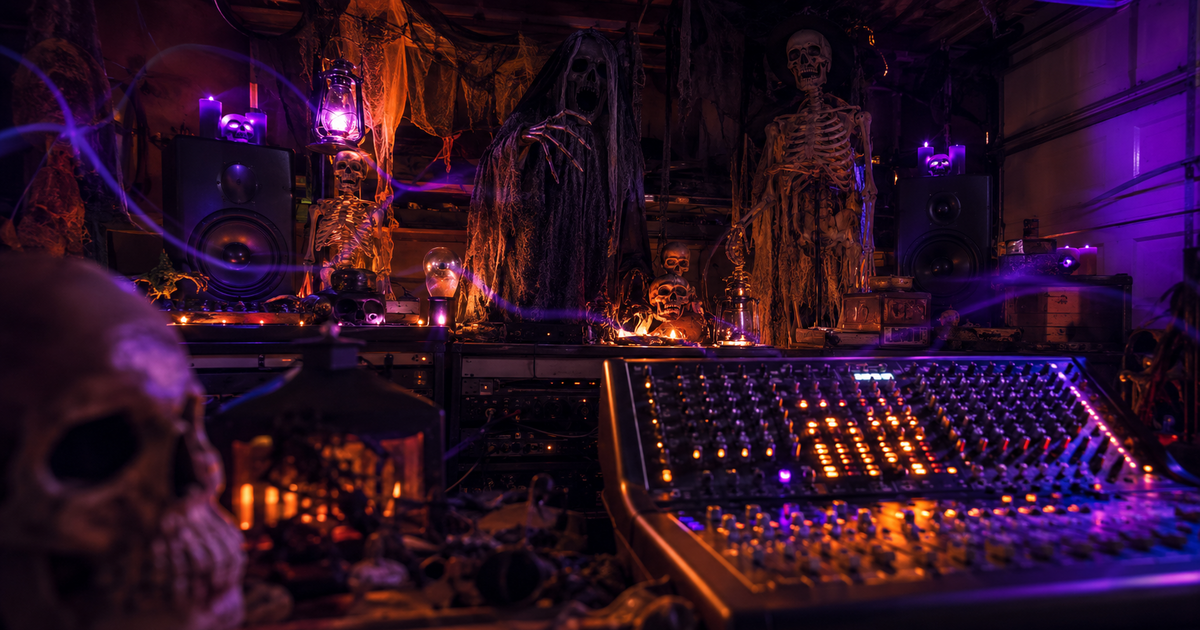
DIY Haunted House Sound Design: A Complete Guide
Effective haunted house sound design uses layered audio—ambient atmosphere, zone-specific effects, and triggered proximity sounds—to build tension and deliver scares that props alone cannot. The key principles are: design a unique soundscape per zone, layer multiple audio elements rather than relying on a single loop, use strategic silence as a tension tool, and position speakers indirectly so sound feels environmental rather than electronic. Most resources you need are free.
Of all the design elements in a haunted attraction, sound is the most underinvested and the most overperforming. Visitors remember the props they saw, but they felt the sound without knowing it. The distant chain that dragged across the floor. The breathing that seemed to come from behind the wall. The sudden silence before the jump scare. Sound builds the psychological architecture that makes physical scares work.
This guide covers everything you need to design a complete haunted house soundscape from scratch—for home haunters and operators alike.
Why Sound Design Matters More Than Most Props
The human threat-detection system is primarily auditory. We evolved to detect danger by sound before we see it—a rustle in bushes, a footstep in the dark, a sound that doesn’t belong in a familiar environment. Haunted house designers who understand this use sound to prime guests physiologically before a scare is delivered. By the time the jump scare arrives, the nervous system is already primed and responding.
A $200 professional sound design setup (two Bluetooth speakers, a streaming device, downloaded audio) will consistently outperform a $500 static prop display in terms of visitor reactions. This is the most efficient investment in your haunt’s scare effectiveness.
The Layered Sound Approach
Professional haunt sound designers think in three layers:
Layer 1: Ambient Foundation
The ambient layer runs constantly throughout your haunt—the acoustic wallpaper of your environment. For a graveyard zone, this might be distant wind, owl calls, and very faint church bells. For an industrial horror zone, low mechanical hum and distant metal scraping. The ambient layer should be barely noticeable on its own. Its job is to fill silence and establish the emotional register of the space.
Volume target: Ambient layer sits at 20-30% of max speaker volume—audible but not dominant.
Layer 2: Zone Effects
Zone effects are irregular sounds that occur within a specific area—creaking floors, a distant scream, a door slamming, something that sounds like it’s getting closer. These are on a randomized loop (or timed playback) that ensures guests never hear the same silence-to-sound transition twice. Unpredictability is everything. A sound that repeats on a predictable 45-second cycle stops being scary after two cycles.
Volume target: Zone effects play at 50-70% of max speaker volume. They should be noticeable and create a response.
Layer 3: Triggered Proximity Sounds
The highest-impact layer. These are sounds triggered by a specific guest position or action—often synced to a prop activation, a door opening, or a scare actor’s movement. A motion-activated speaker trigger ($15–25 online) can fire a sharp sound effect the instant a guest reaches a specific floor position. The precision timing of sound + physical scare produces a double-stimulus that reliably produces screams even in veteran haunters.
Volume target: Triggered proximity sounds should be jarring—80-100% of speaker volume for 1-3 seconds, then back to ambient.
Free Audio Resources
Professional-quality horror sound effects are available for free from multiple sources:
- Pixabay.com: Royalty-free horror sound effects and ambient loops, no attribution required. Search “haunted house,” “horror ambiance,” and “jump scare” for the most useful results.
- Freesound.org: A massive community-built library with high-quality recordings. Most content is available under Creative Commons licenses. Filter by license type to find no-attribution options.
- YouTube Audio Library: Free music and sound effects for download, including ambient horror tracks.
- SoundBible.com: Categorized horror and Halloween-specific sound effects, most free for non-commercial use.
Hardware: Setting Up Your Sound System
You don’t need a professional AV setup to deliver effective haunted house sound. Here’s a practical hardware approach at different budget levels:
Budget Setup ($0–$30 additional cost)
If you own 2-3 Bluetooth speakers, you already have your hardware. Run zone-specific playlists on each speaker from a streaming device or phone. Position speakers facing toward walls (indirect sound) rather than directly at guests—the reflected sound feels more environmental. Free Spotify playlists and YouTube horror ambiance channels provide hours of content at no cost.
Mid-Range Setup ($30–$80)
Add motion-activated sound triggers ($15–25 each) to your key scare positions. These are PIR-sensor-based devices that play a loaded audio file when motion is detected within 5-15 feet. Load a sharp, high-frequency jump scare sound on each trigger. Pair with zone-specific Bluetooth speakers for ambient and effects layers. This is the standard setup for a well-designed home haunt.
Advanced Setup ($80–$200)
A dedicated mini PC or Raspberry Pi ($35–60) running Audacity or free haunt automation software (HauntControl, SoundBite) allows you to design complex multi-channel audio environments with programmed randomization, time-of-day volume changes, and synchronized multi-speaker effects. This level of control approaches professional haunt capability at a fraction of the cost.
Sound Design Techniques That Actually Work
Use silence deliberately. Cutting all audio for 10-15 seconds before a major scare creates heightened anticipation that makes the eventual sound 3-4x more effective. Silence is a scare tool, not just the absence of audio.
Record and layer your own sounds. Recording a door creak in your actual haunt space and playing it back within that same space creates uncanny acoustic coherence that stock sounds can’t match. Record 5-10 environmental sounds from your haunt itself and layer them into your ambient track.
Use directional audio to lead guests. A faint sound emanating from the next zone draws curious guests forward, maintaining flow without visible guidance. A subtle “did you hear that?” effect pointing toward a turn creates curiosity-based navigation.
Never underestimate whispers. A barely-audible whispered voice (recorded and low-passed in any free audio editor like Audacity) played through a small speaker hidden in a wall creates disproportionate unease. The brain’s threat-detection system activates aggressively when it detects speech it can’t quite parse.
Frequently Asked Questions
What kind of speaker should I use in a haunted house?
Bluetooth speakers work well for home haunts—waterproof models (JBL Clip, Anker Soundcore variants) are worth the small premium if your haunt has any outdoor exposure. For professional haunt applications, wired speaker systems with a central amplifier produce more consistent volume control and eliminate Bluetooth latency issues.
How do I prevent sound bleed between zones?
Position speakers facing walls (indirect sound) rather than open spaces. Keep volume levels graduated: ambient lowest, proximity triggers highest but briefly. Physical barriers (black plastic sheeting walls) provide meaningful sound dampening between zones. Accept that some bleed is inevitable and design your soundscapes so they’re not contradictory if heard from adjacent zones.
Can I use music in my haunted house?
Yes, but choose carefully. Atonal or dissonant compositions, horror film scores, and orchestral dark ambient music work better than pop Halloween songs, which break immersion. Stay away from recognizable tracks that guests will associate with specific non-horror contexts. Royalty-free dark ambient music is widely available on Pixabay and the YouTube Audio Library.
What’s the single most effective sound technique for a home haunter?
Motion-activated proximity triggers loaded with a sharp, high-frequency sound effect placed at your primary scare position. The combination of precise trigger timing and sudden high-intensity audio produces a physiological startle response that is extremely difficult to suppress, even for experienced haunters.
Build the full haunt experience. Plan your layout, build it under $200, then add a fog effect.