

Fog Machine Types Explained: Which One Is Right for Your Halloween Haunt?
The main fog machine types are standard water-based foggers, mini and portable foggers, low-lying (ground fog) machines that use a chiller, dry ice foggers, and haze machines — plus fun extras like fog bubble machines. For most Halloween home haunts a standard water-based fogger handles general atmosphere; add a chiller or a low-lying setup when you want the fog to roll across the ground around tombstones and skeletons.
“Fog machine” is really a category, not one product, and buying the wrong type is the most common way home haunters waste money. A machine built for a thick, hanging haze will not give you graveyard ground fog, and a tiny indoor fogger will not fill a yard. Here is every common type, what each one is actually good at, and how to pick the right one for the look you want.
What are the main types of fog machines?
Consumer fog machines split into a handful of types based on how they make fog and where the fog goes once it leaves the nozzle. The quick version is in the table below; the sections after it explain each one.
| Type | Best for | Keep in mind |
|---|---|---|
| Standard water-based fogger | General atmosphere, all-night haze, filling a room or yard | Fog is warm and rises; needs short-burst triggering |
| Mini / portable fogger | Small indoor scares, tight spaces, props with a hidden fogger | Small tank, short run time, limited output |
| Low-lying / ground fog machine | The rolling “graveyard” fog that hugs the ground | Needs a chiller or built-in cooling plus low-lying fluid |
| Dry ice fogger | Thick, low ground fog with no chemical haze | Requires dry ice each use; fog dissipates faster |
| Haze machine | Thin, even haze that makes light beams visible | Not a thick-fog effect; different look entirely |
| Fog bubble machine | Novelty bubbles filled with fog that burst into smoke | A fun accent, not a scene-filling fogger |
Standard water-based fog machines
This is the default fogger and the right first machine for almost everyone. It heats water-based fog juice and pushes out a warm cloud that spreads to fill a space. Wattage roughly tracks output — a higher-wattage machine reheats faster and produces denser fog — but even an entry-level unit is enough for a porch or a small yard. The one thing to understand is that the fog comes out warm, so it rises and drifts rather than hugging the ground. That is perfect for general atmosphere and for catching your lights, and it is the base you build every other effect on.
Mini and portable fog machines
Mini foggers are scaled-down water-based machines with small tanks and lower output. They shine for indoor scares, tight entryways, and hiding inside a prop for a targeted puff of fog on a motion trigger. The trade-off is run time: a small tank empties quickly and the heater needs frequent rests, so a mini is a second unit or a spot-effect tool, not the machine you use to fog a whole display.
Low-lying and ground fog machines
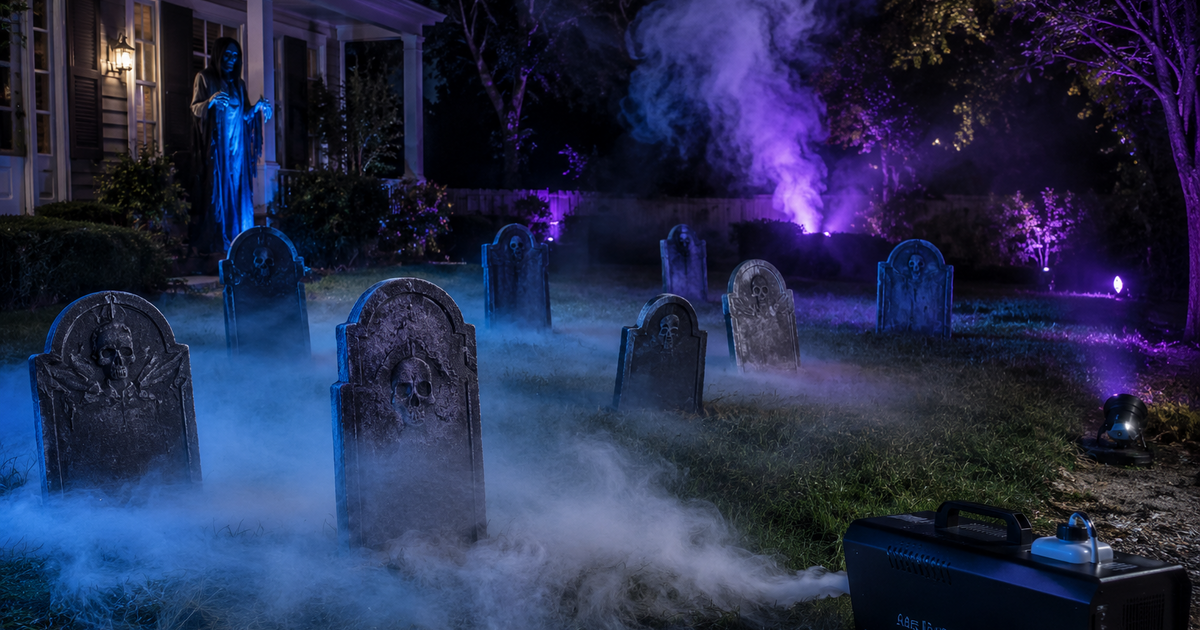
This is the effect most haunters actually want: fog that rolls low across the ground around tombstones, skeletons, and pumpkins. Because standard fog is warm and rises, getting it to stay low means cooling it. Some machines are purpose-built low-lying foggers with built-in ice chambers; more often, home haunters run a standard fogger’s output through a fog chiller — a container of ice the fog passes through before it reaches the yard — paired with a low-lying fluid. Our home-haunt fog effect guide has a chiller build you can copy in an afternoon.
Dry ice fog machines
Dry ice foggers make thick, low-hanging fog by dropping dry ice into hot water, with no fog juice or haze involved. The look is dramatic and the fog stays low on its own, which is why it shows up in stage productions and big set pieces. The catch is logistics: you have to buy and safely handle dry ice for every use, the effect lasts only as long as the water stays hot, and it does not run all night like a fluid fogger. For a home haunt it is a striking effect for a specific scene rather than an all-night solution.
Haze machines — and how they differ
A haze machine is easy to confuse with a fogger but does something different. Instead of thick clouds, it puts out a thin, even haze that hangs in the air to make light beams and lasers visible. If your goal is a foggy, atmospheric look you can see through — and dramatic shafts of colored light — a hazer is the tool. If your goal is a wall of fog or ground fog, it is not; pair a hazer with lighting, not with a graveyard scene.
Fog bubble machines
Fog bubble machines are a novelty crossover: they blow bubbles filled with fog that burst into a little puff of smoke when they pop. Kids love them and they photograph well, but they are an accent for a fun, family-friendly display — not a machine for filling a scene with atmosphere. Think of it as a party effect rather than a haunt workhorse.
Which fog machine type should you choose?
Match the machine to the look, not the other way around. For general atmosphere and your first machine, buy a standard water-based fogger. For the graveyard ground-fog look, add a chiller and low-lying fluid or a dedicated low-lying machine. For visible light beams, choose a hazer. For a dramatic one-scene effect with no chemicals, dry ice. And for a family display, a mini fogger or a fog bubble machine keeps it light. Many home haunts end up running two units — a standard fogger for the yard and a mini or low-lying setup for a signature scene.
Build the scene: fog machine gear
Fog machines, fluid, and chillers are widely available on Amazon, which makes the supporting kit easy to grab in one place. Every link below is tagged and we may earn a commission at no extra cost to you.
Haunt Harvester is reader-supported and may earn a commission from qualifying purchases made through links on this page, at no extra cost to you. As an Amazon Associate we earn from qualifying purchases. We only feature products we would tell a friend about.
- Standard water-based fog machine — the right first machine for general atmosphere.
- Low-lying / ground fog machine — for the rolling graveyard look.
- Low-lying fog fluid — pair with a chiller so fog stays low.
- Mini fog machine — a compact second unit for indoor scares.
- Wireless remote or timer — trigger bursts hands-free all night.
Fog is only half the picture — light and sound finish the scene. See our guides on home-haunt sound design and building on a budget under $200, or add a classic chicken-wire ghost for the fog to drift around.
Frequently Asked Questions
What type of fog machine is best for Halloween? For most home haunts, a standard water-based fogger is the best all-around choice. Add a chiller and low-lying fluid, or a dedicated low-lying machine, when you want ground fog around tombstones and skeletons.
What is the difference between a fog machine and a haze machine? A fog machine makes thick clouds for atmosphere and cover; a haze machine puts out a thin, even haze that makes light beams and lasers visible. They are different looks and not interchangeable.
How do you get fog to stay low to the ground? Cool the fog. Run a standard fogger’s output through a fog chiller with a low-lying fluid, or use a machine built for low-lying fog. Warm fog rises on its own, so cooling is what keeps it hugging the ground.
Are dry ice fog machines better than regular ones? Dry ice makes thick, low fog with no chemical haze, but it needs dry ice for every use and does not run all night. It is great for a single dramatic scene, while a water-based fogger is better for all-night atmosphere.
Do I need more than one fog machine? Not to start. One standard fogger covers most displays. Many haunters add a second mini or low-lying unit once they want a signature ground-fog scene in addition to general yard atmosphere.
Fogging your yard this year? Find haunted houses near you for scene inspiration, then match the atmosphere at home.

As an Amazon Associate we may earn commission from qualifying purchases at no extra cost to you.
new in halloween animatronics
Our honest Spirit Halloween Whirling Wendy review: a 360-degree counter-spinning clown we score 3.7/5. See if this photogenic 2026 centerpiece is worth it.
Spirit Halloween's Willow Witch is a 5 ft 9 in 2026 animatronic at $299.99 with industry-first conversation-response tech that listens and replies in real time.
Home Depot's 8 ft Perilous Plant Monster animatronic (2026) is a $299 outdoor Wicked Woods giant. See what it does, where to buy it, and if it is worth it.
Find Haunted Houses in:
trending in haunt industry
Everything you need to know about East Coast Haunters Convention 2026 — dates, location, what to expect, haunt tours, seminars, and how to get tickets before prices increase.
HalloweenCostumes.com's 2026 Fan Design Program lets you design a real Halloween animatronic. Two winners get 10 props each plus 5% revenue. Submissions close April 30.
ShudderCon 2026 runs April 25–26 at Camp Jordan Arena in East Ridge, TN. Tickets from $15–$75. Here's the full preview for horror fans, haunt pros, and scare actors.