

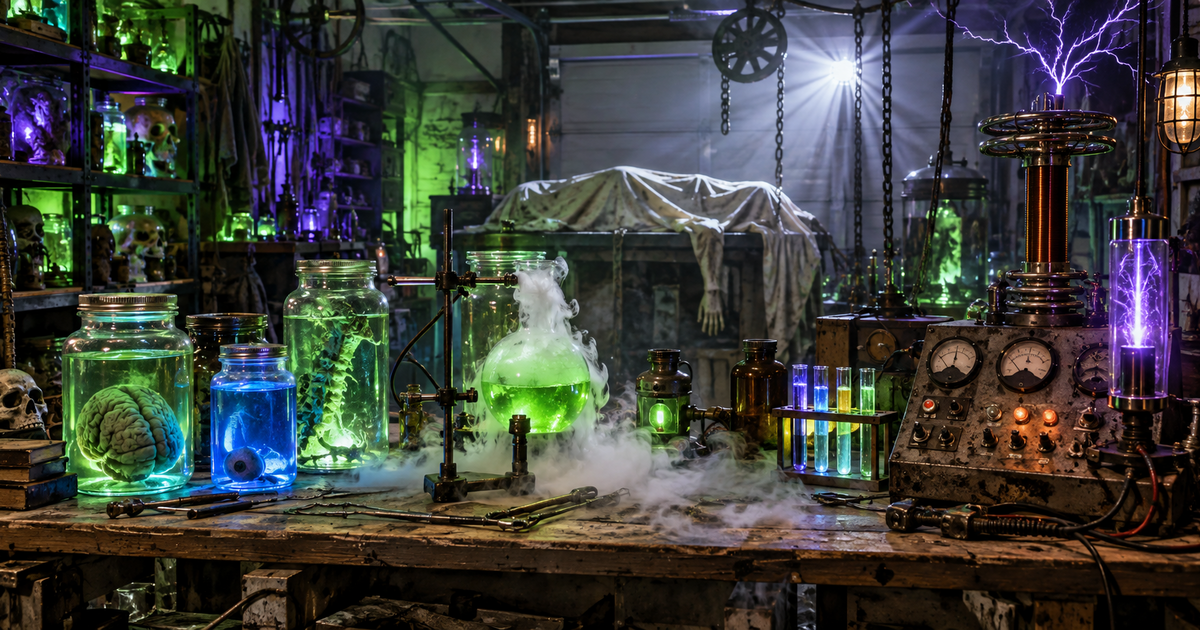
How to Build a Mad Scientist Lab for Halloween: Glowing Specimens, Bubbling Beakers, and a Creature on the Slab
To build a mad scientist lab for Halloween, start with a cluttered lab bench, fill it with glowing specimen jars and bubbling beakers, and light the whole scene with blacklight, green washes, and a flicker of “electrical” strobe. Tonic water glows bright blue under UV light, and a mist maker in a beaker makes it bubble and steam. Add one creature on the slab, a hidden speaker crackling with electricity, and a little fog, and you have a lab that looks like the experiment just got loose.
The mad scientist lab is a perfect home-haunt theme because it rewards two kinds of builders. Beginners can raid the kitchen, the dollar store, and the recycling bin for jars and bottles, while veterans can go deep on lighting tricks and creature effects. It works in a garage, on a porch, or as a single corner of a bigger yard haunt. Like our witch cauldron scene, it is a “someone works here” build, so clutter and detail do most of the scaring.
What do you need to build a mad scientist lab?
Think in layers: a work surface, the experiments, the light that makes them glow, a creature, and sound. Here is the shopping and scavenging list, roughly in order of impact.
| Element | What it does | Materials |
|---|---|---|
| Lab bench | Anchors the scene and holds the clutter | Folding table or workbench, a stained sheet or plastic tablecloth, scrap wood shelving |
| Glowing specimens | The signature effect | Mason jars and bottles, tonic water or highlighter-tinted water, rubber critters, specimen jars and lab glassware |
| Bubbling experiment | Movement and steam on the bench | A beaker or vase with a mist maker inside |
| UV and color light | Makes specimens glow and sets the mood | UV blacklight bars, colored LED spotlights in green |
| “Electricity” | Sells the dangerous-experiment story | A strobe light on short bursts, plasma ball, old wires and switches |
| Atmosphere | Fills the lab with haze | A fog machine on a timer |
| Creature | The experiment itself | Posed skeleton, dummy, or animatronic under a sheet on the slab |
How do you make glowing specimen jars?
This is the effect people will remember, and it costs almost nothing. The trick is ultraviolet light. Tonic water contains quinine, which glows a vivid blue-white under a blacklight. DIY crafters recommend letting most of the carbonation out first, since the fizz does nothing for the glow. For green or yellow jars, pull the ink insert out of a yellow or green highlighter and soak it in water for about a day; the tinted water glows under UV too.
- Fill jars at different levels so the row looks like it was used, not bought.
- Add specimens. Rubber snakes, plastic eyeballs, a peeled cabbage for a “brain,” or a trimmed fennel bulb for a “heart” all read well through glass.
- Label everything with aged, handwritten tags: “Subject 7,” “Do Not Open,” “Failed.”
- Keep liquids sealed and away from outlets and cords. If kids or pets will be near the bench, use plastic jars instead of glass.
How should you light a mad scientist lab?
Lighting is what turns a table of jars into a lab. Put the blacklight close to the specimen shelf so the jars glow, then wash the rest of the scene in sickly green so it feels unhealthy. A single strobe, fired in short bursts rather than constantly, reads as sparks from the machinery. Leave the corners dark so the eye goes straight to the glowing experiments. Our full guide to lighting your home haunt covers color, placement, and power in more depth, and a programmable outdoor timer keeps the whole lab switching on at dusk.
Strobe caution: flashing lights can affect people with photosensitivity. Keep strobe bursts short and infrequent, avoid aiming them into faces, and consider a sign at the entrance if your lab uses strobe.
How do you make the lab feel dangerous?
A lab is scary because the experiment is about to get away. Put a creature on the slab under a stained sheet with one arm hanging off the edge. Wrap it in old cords that run to a “control panel” made from a painted box, toggle switches, and dials. Tip over a stool, splash a little green paint across the floor, and leave a lab coat hanging on a hook as if the scientist left in a hurry.
Sound does the rest. A hidden speaker looping electrical crackle, humming machinery, and the occasional groan from the slab tells visitors the experiment is alive before anything moves. Our haunted house sound design guide explains how to hide speakers and layer tracks. A light layer of haze from the fog machine catches the green light and the strobe, making the whole room feel charged.
Where should you put the lab in your haunt?
A garage is ideal because you control the light, but a covered porch or a tented corner of the yard works too. Build the lab so visitors walk past the bench before they reach the slab, which saves the biggest reveal for last. If it is part of a larger yard display, plan it alongside your other scenes with our guide to planning your home haunt layout from scratch.
Frequently Asked Questions
What makes liquid glow for a mad scientist lab? Tonic water glows blue-white under a blacklight because of the quinine in it, and water tinted with yellow or green highlighter ink also glows under UV. The blacklight is essential; neither glows much in regular light.
How do you make a beaker bubble for Halloween? Put a small mist maker in a beaker or vase with water and underlight it green. It throws a steady, low steam that spills over the rim. Keep cords and water away from outlets and follow the mist maker’s instructions.
What goes in mad scientist specimen jars? Rubber critters, plastic eyeballs, doll parts, a peeled cabbage as a “brain,” or a fennel bulb as a “heart,” in glowing or colored water with aged labels.
What colors of light work best for a mad scientist lab? Blacklight on the specimens, a sickly green wash on the scene, and short bursts of white strobe for “electricity.” Keep the edges dark.
Can I build a mad scientist lab on a budget? Yes. Thrifted jars, tonic water, highlighters, a stained sheet, and cardboard control panels cost very little. Add a blacklight first, then a fog machine and strobe as the budget allows.
Ready to light up the experiment? Plan your haunt lighting and bring your lab to life.

As an Amazon Associate we may earn commission from qualifying purchases at no extra cost to you.
new in halloween animatronics
Our honest Spirit Halloween Wind-Up Wally review: a creepy wind-up clown with a 360-degree spinning key and a pop-up scare for $185.99. We score it 3.5 of 5.
Our honest Spirit Halloween 4 Ft 4 In Harvey Carvey review: a jack-o-lantern-headed creepy kid with knife and spoon for $165.99. We score it 3.5 of 5.
Our honest Spirit Halloween 6 Ft 11 In Lady Misfortune review: a near-7-foot color-changing witch with a crystal ball for $109.99. We score it 3.4 of 5.
Find Haunted Houses in:
trending in haunt industry
Everything you need to know about East Coast Haunters Convention 2026 — dates, location, what to expect, haunt tours, seminars, and how to get tickets before prices increase.
HalloweenCostumes.com's 2026 Fan Design Program lets you design a real Halloween animatronic. Two winners get 10 props each plus 5% revenue. Submissions close April 30.
ShudderCon 2026 runs April 25–26 at Camp Jordan Arena in East Ridge, TN. Tickets from $15–$75. Here's the full preview for horror fans, haunt pros, and scare actors.