

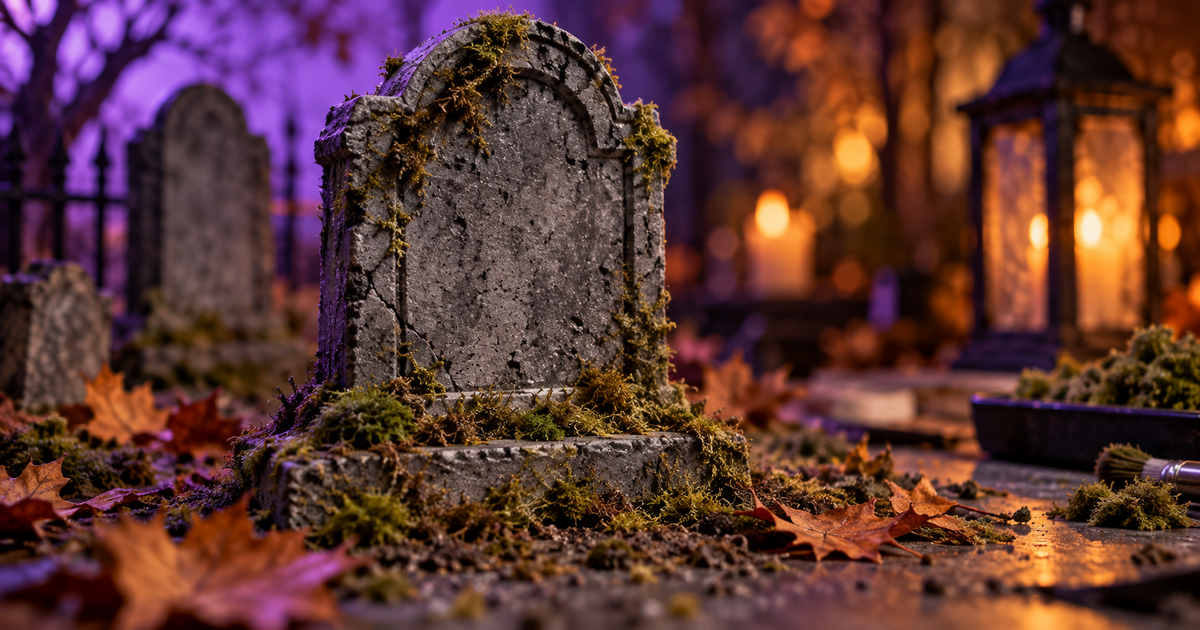
How to Use Static Grass and Flocking for Realistic Halloween Props
Static grass is fine synthetic fiber that stands upright when an electrostatic applicator charges it, and it is the trick that makes a foam tombstone, a corpse prop, or a graveyard base look like it has real moss and overgrown grass instead of flat craft-store texture. Brush on adhesive, ground the applicator to the wet glue, load the fibers, and the static charge stands each strand on end instead of letting it lie flat — the difference between a prop that looks painted and one that looks aged.
Haunt Harvester is reader-supported and may earn a commission from qualifying purchases made through links on this page, at no extra cost to you. We only feature products we would tell a friend about.
Most DIY tombstones and corpse props read as “craft project” the moment you look closely, and the reason is almost always texture — flat paint with no depth. A static grass flocking applicator kit fixes that in one afternoon: model railroaders have used the same electrostatic technique for decades to make miniature grass and moss look real, and it works exactly as well on a foam tombstone or a fake patch of overgrown cemetery ground as it does on a train layout.
What is static grass, and how does the applicator actually work?
Static grass fibers are short strands of nylon, rayon, or polyester manufactured specifically to hold a static electric charge. An applicator grounds itself to a wet-glue surface and charges the fibers as they leave the nozzle, which makes each strand stand up “end-on” and root itself into the glue vertically, instead of falling and lying flat the way loose fiber or static-free flocking would. That vertical orientation is the entire effect — it is what reads as grass or moss from a few feet away rather than a smear of colored fuzz.
Fiber length: which size for which look
Static grass fibers come in a range of standard lengths, typically from about 2mm up to 10–12mm. Shorter fibers (2–4mm) read as short grass, moss, or general ground texture — the right choice for aging a tombstone base or a cemetery patch. Longer fibers (6mm and up) read as taller, wilder grass, which suits an overgrown yard-haunt corner or the base of a “abandoned graveyard” scene better than a manicured prop.
| Applicator type | Best for | Typical price |
|---|---|---|
| Beginner static grass applicator kit | First-time users flocking tombstones, corpse props, or small graveyard bases | $25–$30 |
| Curved-head static grass applicator | Reaching into tight spots — the base of a standing prop, or between tombstone rows | $28–$35 |
| Static grass fiber refills (assorted colors/lengths) | Restocking once your kit’s bundled fiber runs out, or mixing colors for a patchier look | $6–$15 per bag |
| Static grass adhesive | A tack-friendly glue made for flocking, instead of a household glue that dries too fast or too glossy | $8–$14 |
How do you apply static grass to a Halloween prop?
- Prime and paint the base coat first. Static grass reads best over a prop that already has its base color down — a gray tombstone, a brown dirt patch — since the fiber only covers where you brush glue, not the whole surface.
- Brush on adhesive exactly where you want fiber. Work in small sections; static-grass glue stays tacky longer than most craft glue specifically so you have time to apply fiber before it sets.
- Clip the applicator’s ground wire to the wet glue or to a metal pin pushed into it. This completes the circuit the charge needs — skip this step and the fibers will just fall and lie flat instead of standing up.
- Load fiber into the applicator’s hopper and pulse it over the glued area from a few inches away. You will see the fibers visibly stand up and root into the glue as the charge hits them — that reaction is the whole effect working correctly.
- Let the adhesive cure fully, then tap or gently shake off excess. Loose, uncharged fiber that did not root into the glue will fall away, leaving only the upright “planted” strands behind.
- Layer colors and lengths for realism. A single flat green looks artificial; blending in a little yellow-green or brown fiber, or mixing a short base layer with a few longer tufts, reads far more like real overgrowth.
Where this technique shines on a home haunt
Static grass is most effective anywhere a prop needs to look like it has been sitting outside for years: the base of a foam tombstone, moss creeping up a cemetery gate, or ground cover across a full graveyard scene. It also works directly on a corpse prop’s exposed “dirt” patches for a decaying, overgrown look that plain paint cannot match.
Ventilation and cleanup: loose static grass fiber is very fine and easily inhaled or gets into eyes when you shake off excess — work in a well-ventilated space or outdoors, and consider a dust mask if you are flocking a large area. Keep loose fiber away from small children and pets during application, and vacuum up stray strands once the piece has cured.
Frequently Asked Questions
Do I need a special applicator, or can I just glue fiber on by hand? Hand-applied fiber lies flat and looks like colored fuzz; the electrostatic applicator is what makes each strand stand upright, which is the actual grass-like effect people are after.
What fiber length should a beginner buy? Start with a short length (2–4mm) for general ground texture and moss — it is the most forgiving length and suits the widest range of props before you experiment with taller fiber.
Will static grass fall off outdoors in wind or rain? Properly cured, glued-in fiber holds up reasonably well outdoors, but a full season of hard rain and wind will wear any flocking down over time — expect to touch up high-traffic or heavily-exposed spots each year.
Can I use static grass on fabric or foam corpse props, not just tombstones? Yes — it works on any surface that will hold adhesive, including foam latex and fabric, and is a popular way to add a mossy, decayed patch to a corpse or ghoul prop.
How long does one applicator kit last? Most beginner kits include enough fiber for several small props; refill bags are inexpensive, so the applicator itself is the one-time cost and fiber is the ongoing consumable.
Ready for more build techniques? See our realistic prop-aging guide.

As an Amazon Associate we may earn commission from qualifying purchases at no extra cost to you.
new in halloween animatronics
Our honest Spirit Halloween 6 Ft 11 In Lady Misfortune review: a near-7-foot color-changing witch with a crystal ball for $109.99. We score it 3.4 of 5.
Our honest Spirit Halloween 9 Ft 5 In Sinister Straw Man review: a $385.99 giant that springs up to 9 feet with glowing eyes. We score it 3.6 out of 5.
Our honest Spirit Halloween 3 Ft Bog Monster review: a $325.99 outdoor swamp creature that lunges on a sensor. We score this animatronic 3.8 out of 5.
Find Haunted Houses in:
trending in haunt industry
Everything you need to know about East Coast Haunters Convention 2026 — dates, location, what to expect, haunt tours, seminars, and how to get tickets before prices increase.
HalloweenCostumes.com's 2026 Fan Design Program lets you design a real Halloween animatronic. Two winners get 10 props each plus 5% revenue. Submissions close April 30.
ShudderCon 2026 runs April 25–26 at Camp Jordan Arena in East Ridge, TN. Tickets from $15–$75. Here's the full preview for horror fans, haunt pros, and scare actors.