

Fog Juice Guide: How to Choose the Right Fog Fluid
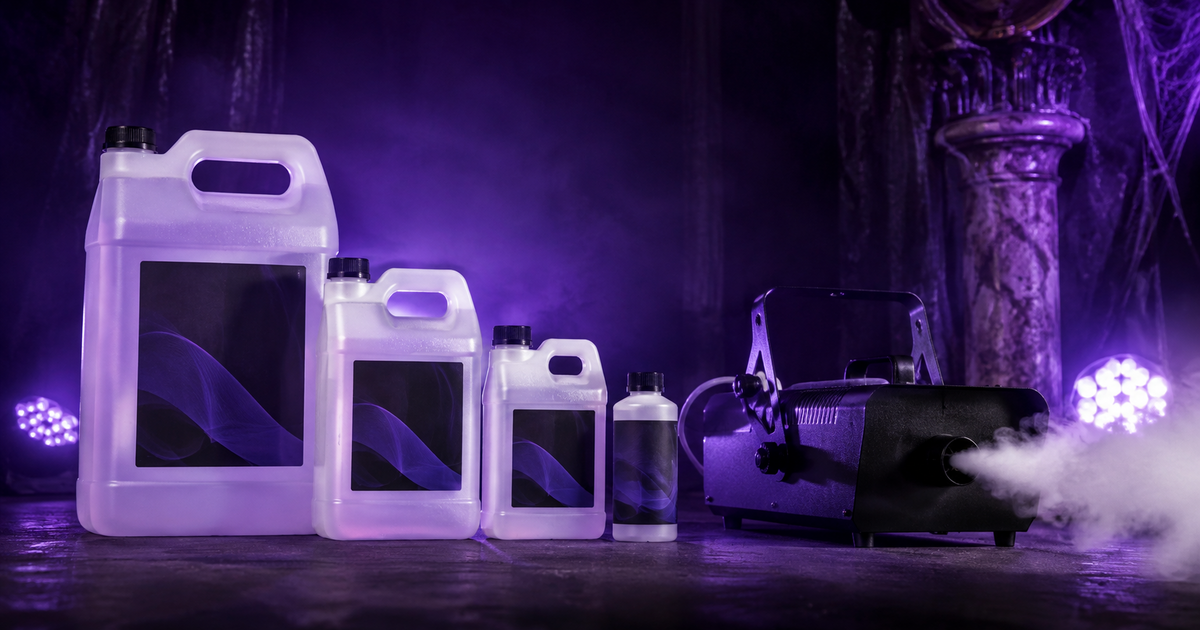
Fog juice is the water-based glycol or glycerin fluid a fog machine heats into fog, and the formula you choose changes everything about the effect. Long-hang fluids like Froggy’s Fog Swamp Juice keep atmosphere in the air for hours; quick-dissipating fluids clear fast for indoor bursts; and low-lying fluids are made to run cold through a chiller for ground fog. Always match the fluid to your machine and your effect, and never substitute homemade or oil-based liquids.
Haunt Harvester is reader-supported and may earn a commission from qualifying purchases made through links on this page, at no extra cost to you. As an Amazon Associate we earn from qualifying purchases. We only feature products we would tell a friend about.
Most people buy a fog machine, grab whatever fluid is on the shelf, and wonder why the effect looks nothing like the haunt down the street. The machine matters, but the fluid is doing half the work. Fog juice controls how thick the fog is, how long it hangs, whether it stays low or rises, and even how much residue it leaves behind. This guide explains the types, how to read a bottle, and which fluid to run for the look you want.
What is fog juice made of?
Modern fog fluid for the machines home haunters use is water-based: a blend of purified water with food-grade glycol or glycerin. When the machine’s heater flashes that fluid to vapor and it hits cooler air, it condenses into the visible cloud we call fog. Good fluid uses lab-grade water and clean ingredients — Froggy’s Fog, for example, states its fluids are made in the USA from UV-filtered de-ionized water with non-irritating ingredients. Cheaper or off-brand fluid can leave more residue and, over time, gum up a machine’s pump and heater.
A quick warning that matters: do not confuse fog fluid with the oil-based haze fluid used in some professional hazers, and never make your own. Homemade mixes and random substitutes can damage the machine and release vapor no one has tested for a room full of people. If it is not sold as fog-machine fluid, it does not go in the tank.
What are the types of fog juice?
Fluids are sorted mostly by hang time (how long the fog lingers) and by whether they are built to sit low. Here is how the main categories break down and when to reach for each.
| Fluid type | What it does | Best for |
|---|---|---|
| Long-hang / high-density | Thick fog that lingers in the air for a long time | Outdoor yards, walkthroughs, all-night atmosphere |
| Quick-dissipating | Fog that appears fast and clears fast | Indoor bursts, dance-floor effects, tight rooms |
| Low-lying / freeze | Dense fluid made to run cold through a chiller and stay on the ground | Graveyard ground fog, rolling floor effects |
| Scented | Standard fog with an added fragrance | Themed rooms; use sparingly, some guests are sensitive |
Long-hang fluid for outdoor atmosphere
If your fog keeps vanishing thirty seconds after each burst, you are probably running a quick-clear fluid outdoors where it should be a long-hang formula. Froggy’s Fog Swamp Juice is the reference point here — it is built for outdoor use with a stated hang time of two to three hours in good conditions, which also means your machine cycles less often and works less hard. For a denser wall of fog, Froggy’s Bog Fog is a high-density long-lasting formula in the same family.
Low-lying fluid for ground fog
Ground fog needs two things: a way to chill the fog and a fluid designed to stay dense and low as it cools. Froggy’s Fog Freezin’ Fog is made specifically for chiller effects — it is engineered to travel across the ground before it starts to rise. Run it through an ice-filled chiller (store-bought or DIY) and you get the rolling graveyard look that a regular fluid simply cannot produce on its own. Our home-haunt fog effect walkthrough shows how to build the chiller.
Quick-dissipating fluid for indoors
Inside a house or a small room, long-hang fluid becomes a problem — the fog builds up, hides everything, and can set off smoke alarms. A quick-dissipating fluid gives you the startle of a sudden burst that then clears, which is exactly what you want for an indoor scare or a doorway effect.
How much fog juice do you need?
Plan on more than you think. A busy machine running most of the night can work through a surprising amount of fluid, and running out mid-event is a classic Halloween mistake. Buying by the gallon (or a multi-gallon case for a big haunt) is cheaper per ounce than grabbing small bottles, and unopened fog fluid stores well for next season. A reasonable starting point is one gallon of long-hang fluid per fog machine for a single big night, plus a separate gallon of low-lying fluid if you are running a chiller. If you are still choosing hardware, our fog machine buying guide matches machine size to yard size.
Build the scene: shop the look
The fluid you pick should follow the effect you are after. These are the picks we would put in a cart; every link is tagged and we may earn a commission at no extra cost to you.
- Froggy’s Fog Swamp Juice — long-hang fluid for outdoor atmosphere.
- Froggy’s Fog Freezin’ Fog — low-lying fluid for chiller ground fog.
- Froggy’s Fog Bog Fog — high-density fluid for a thick wall of fog.
- Chauvet DJ Hurricane 1200 fog machine — the yard-filling machine to run it in.
Once you have the fog dialed in, layering in lighting and sound multiplies the effect — our DIY sound design guide and our budget home haunt build both pair well with a fog-first yard.
Frequently Asked Questions
Can I use any fog juice in any fog machine? Generally yes for water-based machines, as long as the fluid is made for fog machines and matches the effect you want. The exception is specialty gear like dry-ice or oil-hazer units, which use their own materials. When in doubt, follow the machine maker’s recommendation.
Is fog juice toxic? Name-brand water-based fog fluid is designed to be non-toxic and is widely used around performers and guests. That said, dense fog can irritate airways, so ventilate indoor use and be mindful of anyone with asthma or respiratory conditions.
Can I make my own fog juice? We do not recommend it. Homemade mixes can clog and damage the pump, void your warranty, and put untested vapor into the air. Commercial fluid is inexpensive and formulated to run cleanly.
Why is my fog not staying on the ground? Standard fluid produces warm fog that rises. Ground fog requires a low-lying fluid run cold through a chiller or a dedicated dry-ice machine.
Does fog juice expire? Sealed fluid keeps for a long time when stored cool and out of sunlight. Once opened, use it within a season or two; discard fluid that looks cloudy or has anything growing in it.
Ready to build a fog-filled haunt? Find haunted houses near you for inspiration, then dial in your own scene.
new in halloween animatronics
Our honest Spirit Halloween Pumpkin Punisher review: a 7-foot axe-wielding pumpkin giant that lunges forward at guests for the scare. We score it 3.8 of 5.
Our honest Spirit Halloween 4 Ft 3 In Toothy the Clown review: a $215.98 swinging, talking cannibal-clown animatronic scored 3.6 out of 5 for character.
Our honest Spirit Halloween 10 Ft Giant Death Ray review: a $239.98 weather-resistant alien giant with a servo head and full-body LEDs, scored 3.5 out of 5.

Paid link: As an Amazon Associate we may earn commission from qualifying purchases at no extra cost to you.
Find Haunted Houses in:
trending in haunt industry
Everything you need to know about East Coast Haunters Convention 2026 — dates, location, what to expect, haunt tours, seminars, and how to get tickets before prices increase.
HalloweenCostumes.com's 2026 Fan Design Program lets you design a real Halloween animatronic. Two winners get 10 props each plus 5% revenue. Submissions close April 30.
ShudderCon 2026 runs April 25–26 at Camp Jordan Arena in East Ridge, TN. Tickets from $15–$75. Here's the full preview for horror fans, haunt pros, and scare actors.