

How to Make a Lightning Effect for Halloween: Strobes, Thunder, and Timing
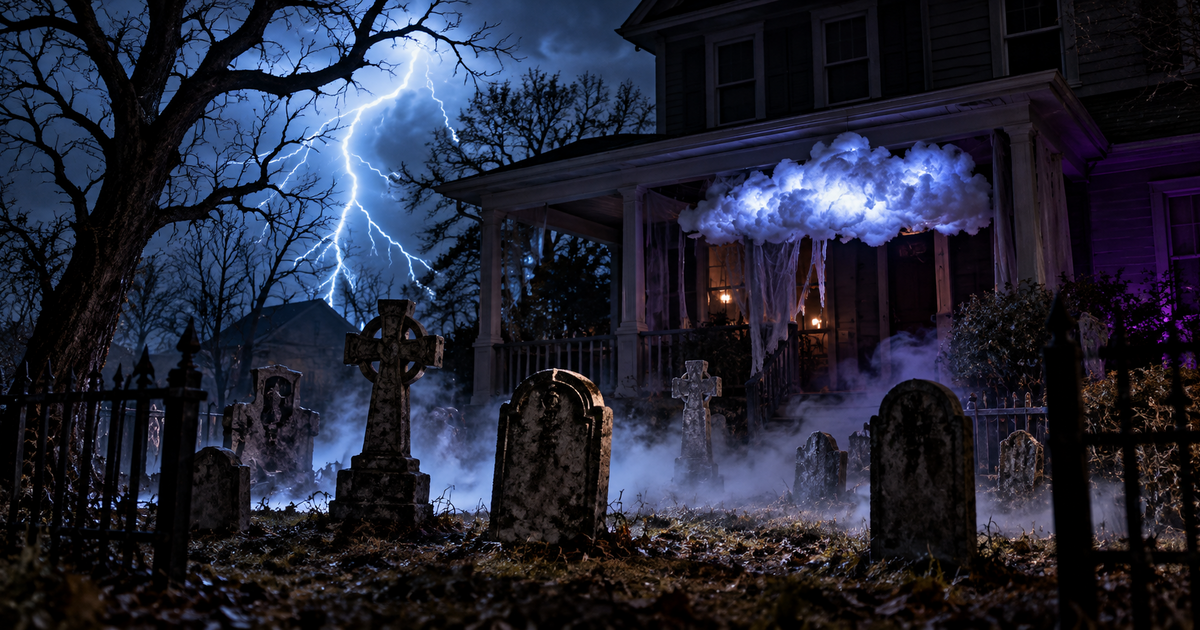
To make a lightning effect for Halloween, fire short, irregular bursts of bright blue-white light (a quick double or triple flicker, then darkness) and follow them with thunder a second or more later. The easiest route is a plug-in lightning projector with built-in sound; for a more realistic storm, use a dedicated lightning-effect controller or a variable-speed strobe hidden behind a prop, synced to a thunder soundtrack on an outdoor speaker.
Haunt Harvester is reader-supported and may earn a commission from qualifying purchases made through links on this page, at no extra cost to you. We only feature products we would tell a friend about.
Lightning is one of the cheapest ways to make a yard feel alive. A graveyard that just sits there becomes a storm scene the moment a flash throws the tombstones into silhouette and thunder rolls a beat later. The trick is that real lightning is not a steady strobe. It stutters, pauses, and comes in clusters, and the sound arrives after the light. Get the rhythm right and even a $15 light sells it. You can browse our Halloween effects picks on Amazon, or pick the build below that fits your budget.
What makes a lightning effect look real?
- Irregular timing. Real strikes come as a flicker of two or three flashes, then several seconds (or much longer) of darkness. A metronome-steady strobe reads as a party light.
- Blue-white color. Cool white with a touch of blue looks like lightning. Warm white looks like a light bulb.
- Indirect light. Bounce the flash off the house, a tree canopy, or clouds of fiber fill rather than pointing it at people. You want the scene to light up, not the bulb to be seen.
- Thunder after the flash. Sound travels about a mile every five seconds, according to the National Weather Service. A thunder crack one second after the flash feels close and violent; a rumble several seconds later feels distant and ominous.
Which lightning setup should you choose?
| Setup | Approx. cost | Realism | Best for |
|---|---|---|---|
| Plug-in lightning projector with sound | About $60 | Good | Fastest setup, porch or house front |
| Lightning-effect controller kit | About $30 plus batteries | Very good | Cloud props, windows, graveyards |
| Variable-speed strobe + thunder track | $13–$18 plus a speaker | Good with careful timing | Budget builds, garages |
Option 1: Plug-in lightning projector
The Gemmy Lightshow Thunderbolt Lightning Projector with Sound (about $60 when we checked, though the listing showed a future ship date, so confirm stock) is the one-box answer: it lights up automatically when plugged in, projects lightning imagery with bright LEDs, swivels to any angle, and has sound built in. Aim it at a light-colored wall or garage door. It is the least fiddly option, though you give up control over timing and the built-in speaker is small, so a separate thunder track helps in a big yard.
Option 2: A dedicated lightning controller (most realistic)
Theater-style lightning kits are made to mimic real storms. The Prop and Scenery Lights Storm Lightning LED kit (about $30) pairs a controller with six flash modes and adjustable speed with a bi-color LED bulb that fires blue and cool-white bursts. It runs on 12V DC (eight AA batteries or a compatible 12V power supply, neither included), which makes it easy to hide inside a prop. The maker suggests building it into artificial poly-fiber clouds: stuff the bulb inside a loose cloud of fiber fill hung from a porch ceiling or tree branch, and each flash lights the cloud from within.
Option 3: Strobe plus a thunder track (budget)
A small strobe with a speed knob can pass for lightning if you control the rhythm. The JLPOW 36-LED mini strobe (about $18) has an auto mode with adjustable flash rate and a sound-activated mode. Here is the trick: set it to sound mode and place it near the speaker playing your thunder track, so the flashes fire on the loud cracks and go quiet during the rumble. The cheaper ENUOLI 24-LED mini strobe (about $13) works for manual bursts. Avoid leaving any strobe on continuous fast flash; it stops looking like weather and starts looking like a dance floor.
How do you set up a lightning effect step by step?
- Choose what the lightning reveals. Silhouettes are the payoff: a tombstone row, a skeleton on the porch, a figure in the window. Place the light behind or beside the scene so each flash throws shapes against the house.
- Hide the source. Tuck the light behind a bush, inside a fiber-fill cloud, or up in a tree. Visitors should see the flash on the scene, not the fixture.
- Build the soundtrack. Loop a storm track with rain, distant rumbles, and occasional sharp cracks. An outdoor speaker such as this weatherproof outdoor Bluetooth speaker pair covers a yard; our haunted house sound design guide explains where to hide speakers and how to keep volume neighborly.
- Sync or offset. With a sound-activated strobe, flashes follow the thunder automatically. With a controller, pick a random or storm mode and let the thunder track run on its own; the mismatch feels natural, like a storm moving around you.
- Keep the rest of the yard dark. Lightning only lands if the scene between flashes is dim. Low colored accent lights are fine; bright white floods cancel the effect. Our home haunt lighting guide covers balancing ambient light.
- Put it on a timer. A smart plug or outdoor timer starts the storm at dusk and shuts it off at a reasonable hour.
Lightning pairs naturally with a graveyard. If you are building one, our Halloween graveyard scene guide shows how to lay out tombstones and fog so the flashes have something to reveal.
Flashing-light caution: according to the Epilepsy Foundation, flashing lights in the range of roughly 5 to 30 flashes per second are the most likely to trigger seizures in people with photosensitive epilepsy. Keep lightning bursts brief and irregular, avoid rapid continuous strobing, aim flashes at the scene rather than at faces, and consider a sign if strobes run near a walkway. Use outdoor-rated cords and keep plug-in fixtures dry.
Frequently Asked Questions
How do you make fake lightning for Halloween? Use a plug-in lightning projector, a lightning-effect controller kit, or a variable-speed strobe hidden behind a prop. Fire short, irregular bursts of blue-white light and add a thunder soundtrack that lags slightly behind the flashes.
Can a strobe light look like lightning? Yes, if you avoid steady flashing. Use slow, irregular bursts of two or three flashes followed by darkness, or put a sound-activated strobe next to your thunder track so it flashes on the loud cracks.
How do you make a lightning cloud prop? Hang a loose cloud of poly fiber fill from a porch ceiling or branch and hide a lightning-effect bulb or small strobe inside it. Each flash lights the cloud from within.
What color should Halloween lightning be? Cool white with a blue tint looks most like real lightning. Warm white reads as an ordinary light bulb.
How long after lightning should thunder play? About one second makes a strike feel close; five seconds or more makes it feel distant. The National Weather Service rule of thumb is roughly five seconds per mile.
Give the storm something to reveal. Build your graveyard scene next.

As an Amazon Associate we may earn commission from qualifying purchases at no extra cost to you.
new in halloween animatronics
Spirit Halloween's Willow Witch is a 5 ft 9 in 2026 animatronic at $299.99 with industry-first conversation-response tech that listens and replies in real time.
Home Depot's 8 ft Perilous Plant Monster animatronic (2026) is a $299 outdoor Wicked Woods giant. See what it does, where to buy it, and if it is worth it.
Our honest Spirit Halloween 6 Ft 8 In The Lantern Keeper review: a $255.99 glowing pumpkin sentinel that shushes you. We score this animatronic 3.7 of 5.
Find Haunted Houses in:
trending in haunt industry
Everything you need to know about East Coast Haunters Convention 2026 — dates, location, what to expect, haunt tours, seminars, and how to get tickets before prices increase.
HalloweenCostumes.com's 2026 Fan Design Program lets you design a real Halloween animatronic. Two winners get 10 props each plus 5% revenue. Submissions close April 30.
ShudderCon 2026 runs April 25–26 at Camp Jordan Arena in East Ridge, TN. Tickets from $15–$75. Here's the full preview for horror fans, haunt pros, and scare actors.