

How to Use Blacklight (UV) Lighting for a Glow-in-the-Dark Halloween Display
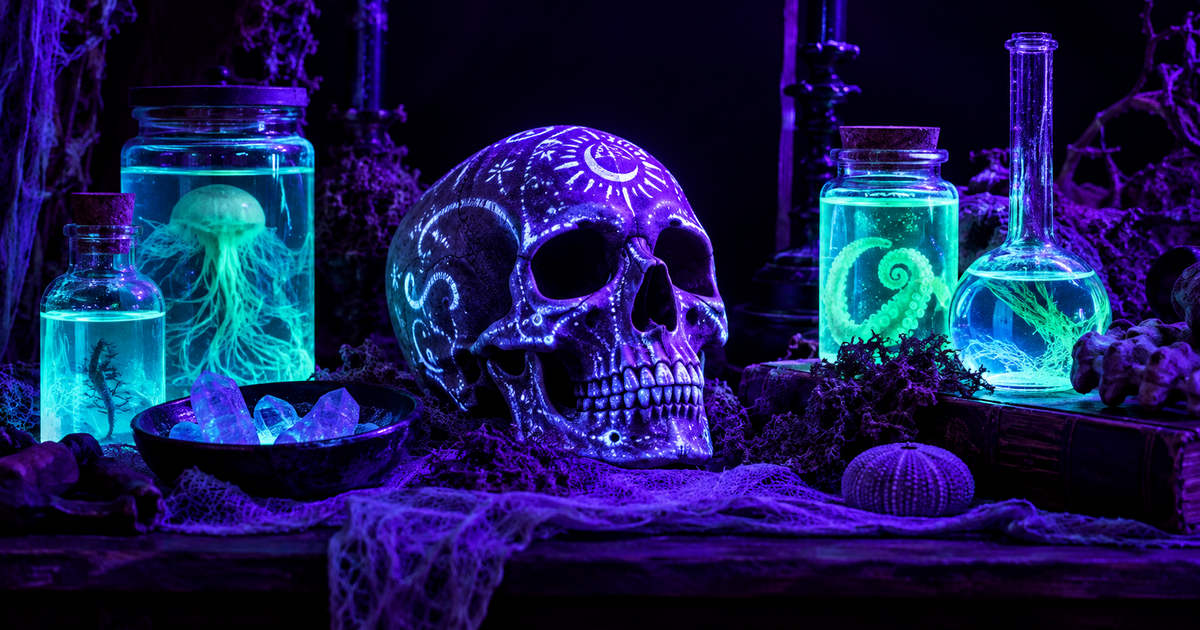
Blacklight (UV-A) fixtures make Halloween displays glow by lighting up materials that fluoresce under ultraviolet light — white fabric, certain paints, tonic water, and some plastics — while everything else stays dim. Turn off competing light sources, aim the fixture across your scene rather than into visitors’ eyes, and pair it with a few genuinely UV-reactive props instead of expecting it to make ordinary decorations glow.
Haunt Harvester is reader-supported and may earn a commission from qualifying purchases made through links on this page, at no extra cost to you. We only feature products we would tell a friend about.
Blacklight is one of the cheapest ways to make a home haunt look professional, but most first-time buyers aim it wrong and end up with a purple glow that does nothing. A UV black light bar is inexpensive and versatile, but the fixture is only half the job — the other half is knowing what actually reacts to it. Get both right and blacklight turns a plain graveyard or cobweb corner into the kind of glowing scene people stop to photograph.
How does blacklight actually work?
A blacklight bulb looks purple but is mostly putting out UV-A light just outside what your eyes can see, plus a small amount of visible violet. When that UV-A hits a material containing fluorescent compounds, the material absorbs the invisible UV energy and re-emits it as visible light — usually a bright white, blue, green, or pink glow. Materials without those compounds just look dim purple, which is why a blacklight makes some props pop and leaves others looking like nothing happened.
What glows under blacklight?
- White and pastel fabric — most detergents include optical brighteners that fluoresce strongly, so a plain white sheet or costume glows brighter than colored ones.
- Tonic water — the quinine in tonic water glows an eerie blue-green, a favorite for “mad scientist” jars and potion bottles.
- UV-reactive paint and body paint — sold specifically for blacklight parties and haunted attractions; dries invisible or pale in normal light, then glows under UV.
- Certain plastics and vinyl — some glow-in-the-dark and neon-colored props react without any extra work.
- Teeth and fingernails — real ones glow faintly, which is a fun detail for actors in a walk-through haunt.
Ordinary paint, most colored fabric, and anything not specifically UV-reactive will not glow no matter how close you put the light — that is the single most common blacklight disappointment, so build your display around materials from this list rather than hoping.
Which blacklight fixture should you buy?
| Fixture type | Best for | Typical price |
|---|---|---|
| LED blacklight bar or strip | Lighting a prop table, jar display, or doorway from a few feet away | $10–$25 |
| Blacklight bulb (screw-in) | Replacing a bulb in an existing porch or lamp fixture | $8–$15 |
| Blacklight flashlight | Spot-lighting one prop, or letting trick-or-treaters “discover” hidden UV details | $10–$20 |
| Larger UV floodlight | Washing an entire room or yard zone in blacklight for a walk-through | $20–$45 |
A single UV black light bar is enough to cover a prop table or a small display; a full walk-through home haunt usually needs two or three fixtures spread across the space rather than one trying to light everything.
Where should you place blacklights for the best effect?
Kill competing light first
Blacklight competes with every other light source in the room. Turn off overhead lights, unplug white string lights near the display, and dim or gel any porch light nearby — the darker the surrounding space, the more dramatic the glow.
Aim across the scene, not at visitors
Mount fixtures to the side or slightly above your props, angled across the display rather than pointed toward where people will be standing. This lights the glowing materials without shining the fixture itself into anyone’s eyes.
Layer it with your existing lighting plan
Blacklight works best as an accent, not your only light source. If you are already running colored spotlights on a fogged scene, add blacklight to one specific zone — a potion table, a cobweb corner, a UV-painted sign — rather than trying to blacklight an entire yard. Our home haunt lighting guide covers how to layer color, blacklight, and motion together, and our graveyard scene guide has a section on UV-painted tombstone lettering that only becomes visible under blacklight.
Eye and skin safety: the UV-A used in novelty and party blacklights is the least energetic type of ultraviolet light and is not the UV-B/UV-C used in tanning beds or germicidal sanitizing lamps. Casual exposure at a party or display is not considered a meaningful risk, but staring directly into the bulb for a long period can cause photokeratitis (temporary, sunburn-like irritation of the eye’s surface) in rare cases. If you or your crew will be near an active blacklight for hours while building or staffing a haunt, UV-blocking glasses are a cheap precaution, and bulbs should stay out of reach of young children the same way any hot fixture should.
How do you make DIY props glow under blacklight?
- Paint with UV-reactive paint. Craft and party stores sell blacklight paint in tubes or spray cans; it looks pale or invisible in daylight and glows once the blacklight comes on.
- Fill jars with tonic water. For a mad-scientist or potion-table look, tonic water glows blue under blacklight with zero prep — just pour it into a clear jar or bottle.
- Reach for white fabric first. Before buying specialty paint, test what you already own — a white sheet, glove, or bandage under blacklight often glows more than you expect because of laundry brighteners.
- Highlight edges, not whole props. Painting just the eyes, teeth, or an outline in UV paint reads as more unsettling than a prop that glows all over.
- Test before the big night. Fluorescence varies by brand and even by fabric batch, so do a dark-room test a week ahead rather than discovering a “glow-in-the-dark” costume does nothing on October 31.
Frequently Asked Questions
Is a blacklight the same as a UV sanitizing light? No. Party and novelty blacklights emit UV-A, the weakest and least harmful band of ultraviolet light. Germicidal or sanitizing UV lamps use UV-C, which is far more intense and is not the same product category.
Why isn’t anything glowing under my blacklight? Most likely your props simply are not UV-reactive. Ordinary paint, most colored fabric, and standard plastic do not fluoresce; you need materials specifically labeled UV-reactive, white fabric, or something like tonic water.
Can I leave a blacklight on outdoors all night? Use a fixture rated for outdoor/damp locations if it will be exposed to weather, and run it on a timer or smart plug so it is not left unattended for hours after your display closes down.
Does blacklight work in a partially lit room? It works best in near-darkness. Even moderate ambient light — a porch light, a TV, a hallway spilling in — will wash out the glow, so control the surrounding light before adding more blacklight fixtures.
Is blacklight safe for kids to be around? Casual exposure at a party or trick-or-treat stop is standard practice at haunted attractions and is not considered a meaningful UV-A risk; keep bulbs out of reach so they are not touched while hot, the same precaution you’d take with any lighting fixture.
Ready to plan your full display? Start with our home haunt beginner’s guide.

As an Amazon Associate we may earn commission from qualifying purchases at no extra cost to you.
new in halloween animatronics
Home Depot's 8 ft Perilous Plant Monster animatronic (2026) is a $299 outdoor Wicked Woods giant. See what it does, where to buy it, and if it is worth it.
Our honest Spirit Halloween 6 Ft 8 In The Lantern Keeper review: a $255.99 glowing pumpkin sentinel that shushes you. We score this animatronic 3.7 of 5.
Our honest Spirit Halloween Doomsday Duo review: a two-figure, outdoor-rated gas-mask reveal we score 3.9/5. See if this 2026 scene anchor is worth it.
Find Haunted Houses in:
trending in haunt industry
Everything you need to know about East Coast Haunters Convention 2026 — dates, location, what to expect, haunt tours, seminars, and how to get tickets before prices increase.
HalloweenCostumes.com's 2026 Fan Design Program lets you design a real Halloween animatronic. Two winners get 10 props each plus 5% revenue. Submissions close April 30.
ShudderCon 2026 runs April 25–26 at Camp Jordan Arena in East Ridge, TN. Tickets from $15–$75. Here's the full preview for horror fans, haunt pros, and scare actors.